10 min read

A Leave of Presence: How Roger Ebert Changed How I Think About Fiction
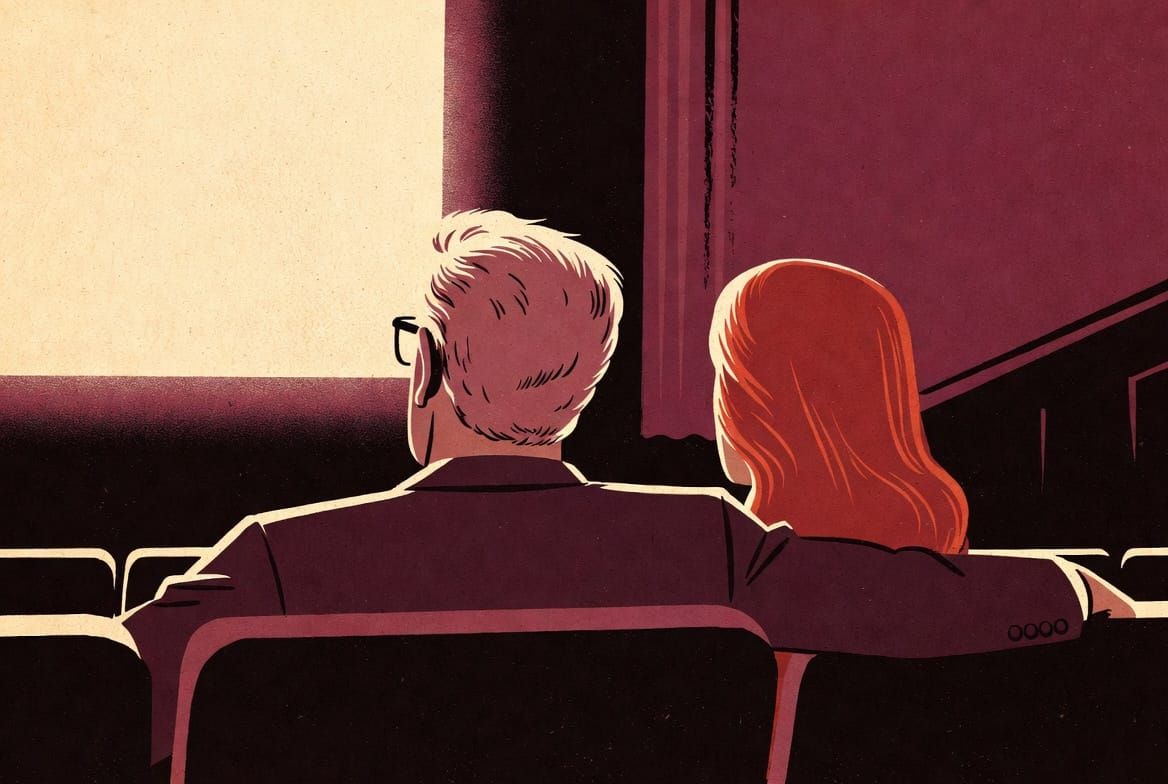
A Leave of Presence: How Roger Ebert Changed How I Think About Fiction

Roger Ebert was on my television for my entire childhood, then on my computer screen for most of my adulthood. And for the last five years of his life, through his blog, he was in my head. He forever changed how I watch movies and how I think about fiction. And if I'm being honest, he changed how I think about the world.

I want to tell you about him, because he deserves it, and because this seems like the right place.

Much More Than Thumbs Up or Thumbs Down

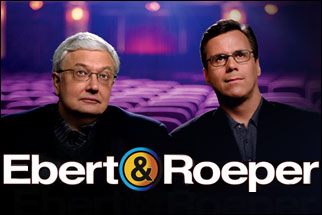
Most people knew Ebert from the half-hour movie review show, Siskel and Ebert, later Ebert and Roeper. It was two guys in a movie theater, arguing over a new release and giving it a thumbs up or a thumbs down. It was a simple format, but the thinking behind it was anything but.
Ebert approached every film with a question that seems obvious until you realize almost nobody else asks it: Does this movie succeed at what it's trying to do, for the audience it's trying to reach? He reviewed a dumb comedy on its merits as a dumb comedy. He reviewed a prestige drama on its merits as a prestige drama. He didn't punish a horror film for failing to be Bergman, and he didn't let a Bergman film coast on its reputation if the execution was weak. That was why he was able to give slasher movies like I Know What You Did Last Summer a thumbs up, even though he famously didn't like slashers.

This is, of course, basic intellectual honesty, but that bare minimum standard requires something most critics lack, especially the modern iteration of internet critics. He was willing to meet an audience where they are without condescending to them. And he wasn't willing to sway his review based on how well his opinion would be received. Ebert could write a four-star review of a slasher film and a zero-star review of an Oscar nominee in the same week, and people worldwide trusted both verdicts because they understood the framework.

Ebert was the only verdict I needed. In the days of Netflix DVD delivery, every Tuesday I would read Roger's new reviews. For everything he said was good (and it sounded like something I would enjoy), I added it to my Netflix queue. When the film was released on DVD, I could expect it in my mailbox within a week. That's how I saw foreign films like Jet Li's Hero and multiple K-horror movies that I otherwise would never have heard of.

His framework rewired how I evaluate fiction and it's been a big part of how I approach the written word as well. When I sit down with a client's manuscript, I'm asking the Ebert question before anything else. What is this story trying to do? Who is it for? Does it deliver? Everything else is secondary. If you get that question wrong, you can have the most beautiful prose in the world and your book will still fail.

The Art of the Takedown

Before I was the nonsense-free editor, Ebert was the critic who never held back. Unlike the so-called movie critics we have today, he didn't blunt his criticism out of fear of losing access.

When Rob Schneider's Deuce Bigalow, European Gigolo came out in 2005, a Los Angeles Times critic named Patrick Goldstein savaged it. Schneider fired back, calling Goldstein unqualified because he'd never won a Pulitzer Prize. Shortly thereafter, Ebert reviewed the film himself, gave it zero stars, and then addressed Schneider directly in print: Schneider was correct that Goldstein had never won a Pulitzer. As chance would have it, Ebert had. And speaking in his official capacity as a Pulitzer Prize winner, he told Schneider: Your movie sucks.

He would later publish a book of all his most deliciously negative movie reviews and, quite correctly, titled it Your Movie Sucks.

Then there was Vincent Gallo. After Ebert walked out of The Brown Bunny at Cannes in 2003 and called it the worst film in the festival's history, Gallo called Ebert a fat pig and claimed to have put a hex on his colon. Ebert's response was perfect: "It is true I am fat. But one day I will be thin. You will always be the director of The Brown Bunny." (When Gallo re-edited the film and cut 26 minutes, Ebert watched it again and gave it three stars. Because it was a different film, and because he was honest.)

What made these takedowns land is the same thing that made his praise credible. Every opinion was specific. It was never about the vibes or any vaguery about just not liking it. His praise and his criticisms came from decades of watching, thinking, and writing about film, which gave him the language to tell you exactly why a movie failed, not just that it did. He could name the structural problem, the tonal miscalculation, the place where the director was obviously getting studio interference. He was able to explain what he was seeing, and everyone who listened to him was smarter and a better critic for having heard him.

The Blog and How it Changed Me

Roger's reviews were rightfully legendary, but for me (and I suspect many others), it was his blog that made Roger feel like a friend, rather than just a respected media figure.

Ebert lost his voice to cancer in 2006. The lower half of his face was gone. He couldn't eat, drink, or speak. It was hard to watch. But his mind was sharp as ever, so he wrote. He wrote more than he had ever written, about more subjects than he had ever covered. Movies, obviously. But also politics, faith, alcoholism, his childhood in Urbana, Illinois, his parents, his marriage.

He wrote about how he met his wife Chaz. He had been a bachelor until he was 50. He was out to dinner with Ann Landers (literally; they were friends) and spotted Chaz at a nearby table. He liked her looks, her confidence, and the way she held the attention of the room. He pulled one of the oldest tricks in the book to get her number, and the rest of their life together began. He wrote about her the way men wrote about women before irony made sincerity uncool. She filled his horizon. She was the great fact of his life. She saved him from the fate of living out his years alone, which is where he had been heading.

Roger and Chaz Ebert

He wrote about his sobriety, about being a member of Alcoholics Anonymous since 1979. He wrote about his parents with a tenderness that could make you stop what you were doing and call your dad. He wrote about friendship and sex and growing old and the country he watched change around him. His father had told him, many times, that Democrats were the working man's party, and Roger never crossed a picket line in his life. Were he alive today, I suspect his view of that particular inheritance would be more complicated. But Roger had an extraordinary capacity for reconsidering his positions, for listening to people who saw things differently, which is why his comment section was unlike anything else on the internet.

The Finest Comments Section That Ever Existed

Roger moderated his own comments. Ruthlessly. He read every single one and replied thoughtfully. I'm honored to say he replied to me, once. He only banned people for being nasty, never for disagreeing. The result was a forum where intelligent, articulate people felt safe enough to write real responses, sometimes hundreds of words long, carefully considered. I have never seen anything like it since. I doubt I will.

You could see the quality of his readership in the "Women Are Better Than Men" post he published in 2012, which I thought was an odd thing for him to say. Women are less physically destructive than men, sure. But to claim that women are nicer, more empathetic, more generous as some sort of natural state seemed willfully naive. I wondered how Roger could have made it as far as he did in life without witnessing female aggression and cruelty up close. How could he not know that women are just as mean as men, but display their meanness differently?

I wasn't the only one taken aback by his overtly anti-male musings.

The pushback was enormous. Over 400 comments, 80 percent hostile, many from people who had never posted before. He was called a feminist bitch, which of course earned a terse clap-back. His audience, largely male and largely smart, told him he was wrong. And he heard them. He wrote a follow-up in which he acknowledged that his sweeping generalization could not possibly be true, that readers had correctly asked how he would feel about a headline reading "whites are better than blacks." He stood by the spirit of what he was trying to say, but he gave his readers a fair hearing, and he was honest about where his argument broke down.

That is so rare. The willingness to say "I had a point, I did a bad job of making it, and you were right to push back." The follow-up post did not retreat into wounded pride or double down out of stubbornness. He engaged with the best arguments against his position and credited the people who made them. If every writer on the internet operated with that kind of intellectual integrity, we would live in a different world.

"Don't Move. I Want to Move. Don't Move."

The blog posts I liked best were those inspired by a movie review he had recently done. The review told you if the movie worked, and then the accompanying blog post took you inside Roger's mind and his memories and showed you what the movie made him feel.

In 2009, Ebert published a blog post about eroticism in film that I have thought about more than almost anything else I've read online. The title came from three lines in Out of Africa, spoken between Meryl Streep and Robert Redford, a scene that Sydney Pollack built to be erotic without being explicit.

Ebert's argument was that modern cinema had lost its understanding of desire. That exhibitionism had been confused with sexiness. That the editing pace of most films allowed no time for anticipation, for the slow recognition of want. He wrote about bodies changing when desire takes hold, about the eroticism of restraint, about why a fingernail tracing a spine can carry more charge than any amount of nudity.

Streep and Redford in Out of Africa

I'm two generations removed from Ebert, and thus was never particularly attracted to Redford or Streep. They're my parents' age and I never put them in that "sexy" box. They don't belong there. Not for me. Before I read that post, I had never given much thought to how desire works on screen. Either a scene did something for me or it didn't, and whether it did usually came down to whether I found the actors attractive. That was as deep as my analysis went.

After reading his post and then rewatching the film, I understood something new about portraying desire. Our whole bodies change when we feel it. The way we hold ourselves, the way we breathe, the quality of our stillness when we want to move but don't. Ebert could see all of this on screen, and he could write about it in a way that made you see it too. This was something I would never have learned from parents or teachers. It was an education in paying attention to what the body knows.

A Leave of Presence

On April 2, 2013, two days before he died, Roger published his last blog post. His cancer had come back. A hip fracture turned out to be something worse. He announced he would be scaling back, writing fewer reviews, focusing on the projects and people that mattered most to him. He called it a leave of presence.

He was 70 years old. He had been the film critic for the Chicago Sun-Times for 46 years, and had written over 300 reviews the previous year alone, more than in any other year of his career, even as his health was failing. His final post was full of plans. The new website, a Kickstarter for a TV show, more classic movie reviews, and hiring new critics he admired.

He wrote that it really stinks that the cancer had returned but assured us all he would write on good days and on bad days. He thanked his readers for 46 years. He signed off.

Two days later, he was gone.

I found out at my desk at work, and immediately started sobbing at the headline. I couldn't even make it to the ladies' room before dissolving. It was embarrassing because who could I even talk to about it? How could I explain what I felt? He was a film critic and I had never met him.

But I felt like I knew him. Through his writing, through all those years of reading him, first in newspaper syndication and then on the screen, I felt like I could see his spirit. And it was a good spirit. Generous and curious and sharp and capable of joy even as his body was taken from him piece by piece. He was funny. He was vain about the right things and humble about the right things. He loved his wife with a sincerity that embarrassed no one.

Of all the men I never met, I miss him the most.

Roger Ebert taught me to ask the right question about a piece of fiction and see it for what it is, and how it connects to the broader world. He taught me that a critic's job is to serve the reader, that intellectual honesty requires meeting a work on its own terms, and that the best writing about art is also writing about life.

If you've never read his blog, good luck navigating the wreckage of his website, which has been redesigned into uselessness since his death. Try the Wayback Machine instead. Start with "Go Gentle Into That Good Night," or "Books Do Furnish a Life," or "How I Believe in God." Start with any of them. You will find a man worth knowing.

Subscribe to my newsletter

Subscribe to get the latest articles and news

Member discussion