
Actually, it IS That Deep

I had the supreme displeasure of having a reel do well on Instagram this week. Displeasure, you ask? Why wouldn't I want my social media post to do well (for once)? Because when the algorithm smiles on you, a lot of people you don't know come into your orbit for the first time, and it's not always the people you'd want.
On Tuesday evening, after my latest YouTube video went live, I posted a short clip from that full video as an Instagram reel. These clips usually get about 20 views, so I posted it and went on about my evening. When I checked it the next morning, I was notified immediately that I had dozens of comments waiting for me. Most of them were short and normal. "I loved this movie!" "I hate this movie! And I hate Rob Zombie!" "You look like 80s Bridget Fonda."
Yes, that was a real comment. Completely untrue, obviously, but I'll take it.
But then there was a cohort of comments that I blocked without responding to. They all said variations of the same thing. And no, it wasn't gross sex stuff. It was a bunch of edgy bois who wanted to tell me to calm down. That it's just a movie, and it doesn't matter.
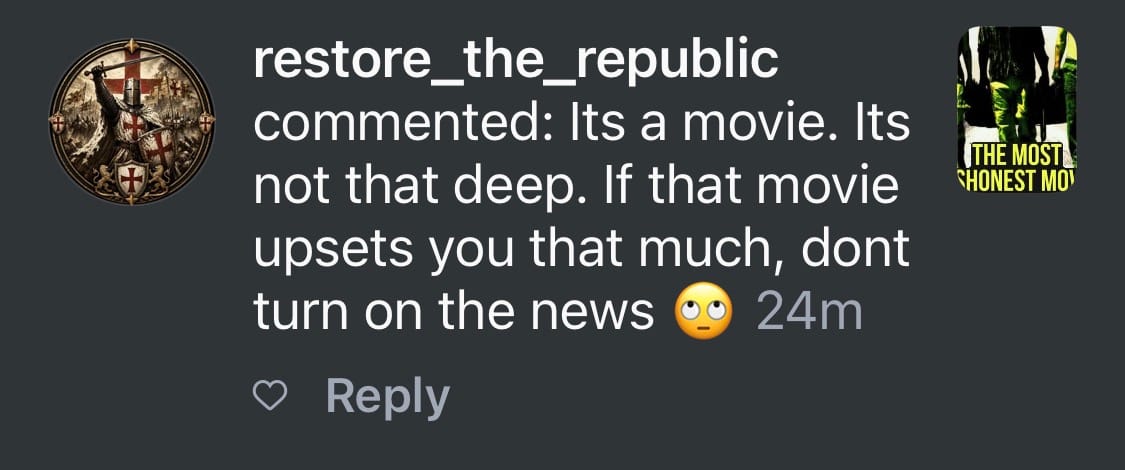
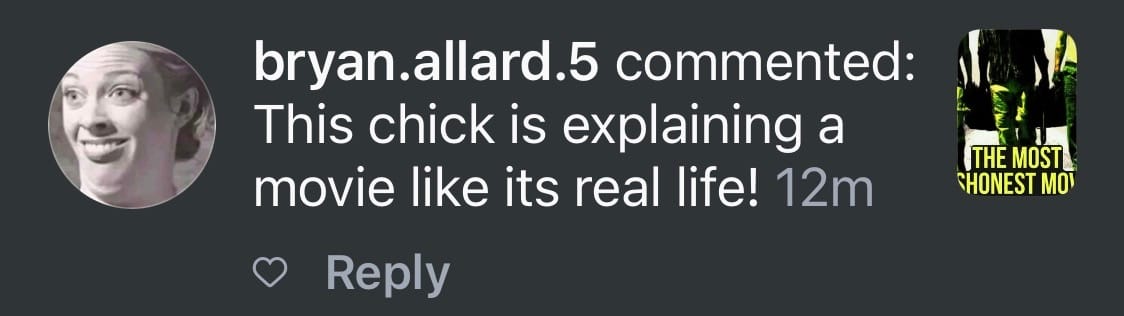
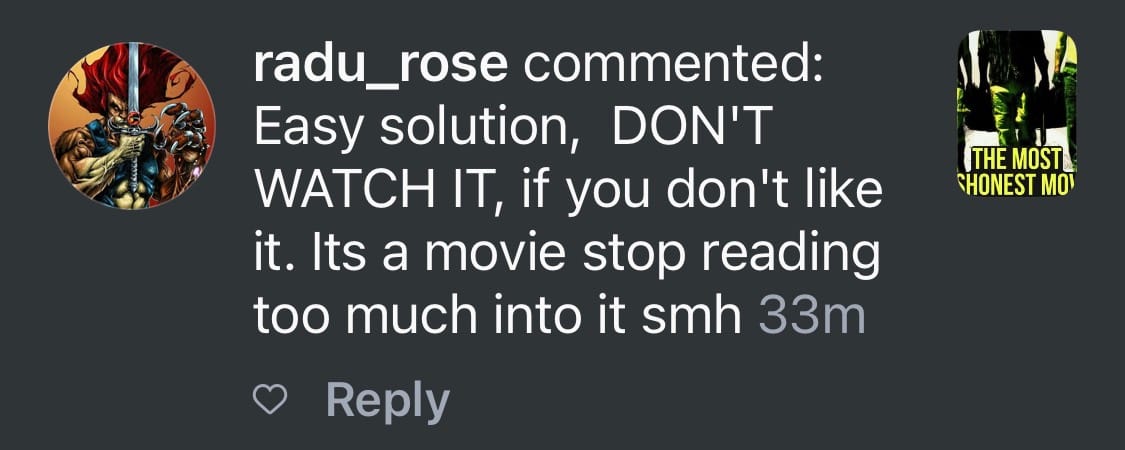
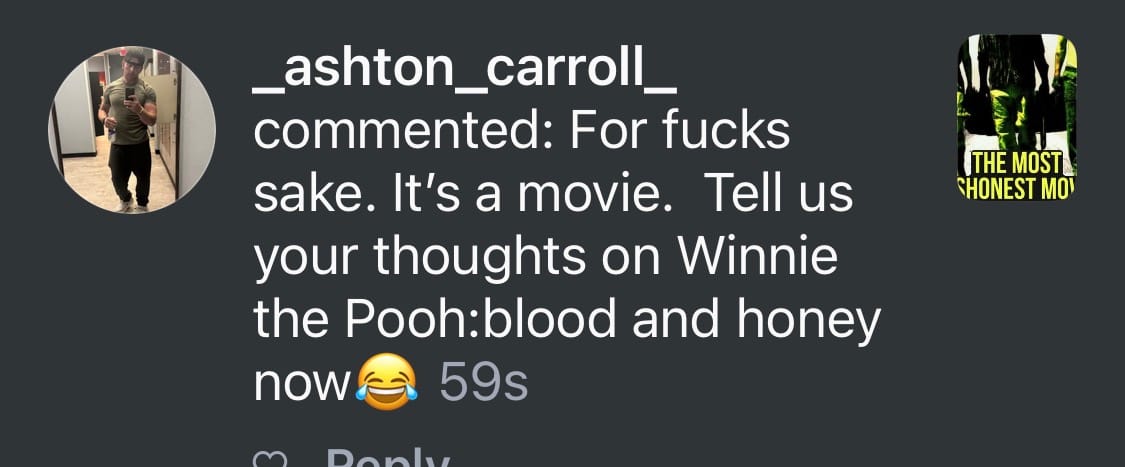
Yes, I really blocked them for this. I'll block the next four, too, and anyone after them who shows up to tell me a story isn't worth thinking about.
It's not the disagreement that irritates me. I'll engage all day if you tell me my analysis is wrong. That I missed something. Or like one fine gentleman stated, that I just don't understand horror. No block for him, just a conversation where we agreed to disagree. My comment sections are full of people who think I'm wrong about Heat and wrong about Midnight Mass, and they're welcome to stay as long as they like, because they have an opinion of their own and they can lay it out to contrast against mine.
But if you say that the movie itself doesn't matter, that stories aren't worth examining or even paying attention to, then in all sincerity, you're in the wrong place.
Tom Cruise Taught You More Than John Paul II
Yeah, I said it. And unless you're one of the three priests in my subscriber base (hello, Fathers) I know it's true. I've made the full case for why stories matter before, so I'll keep this part short. Most of us spent more of our childhoods in front of a television than we did in a classroom or a pew. Stories shape our morality more than our parents, our schools, or our churches do, because they get more hours with us and they live rent free in our heads full-time. They also teach us lessons without ever announcing they're doing so. Now that we're grown (and Hollywood has lost all its subtlety), we know we're being preached to. But when we were young, we didn't. And the world is full of kids now who are absorbing all the lessons the Disney writers room can throw at them. A disturbing number of adults too.
Fiction Makes the Culture
It’s stronger than parenting... and always was
 Kristin McTiernan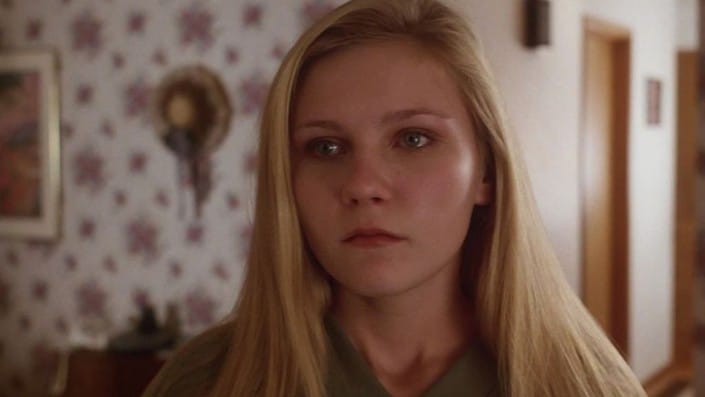
Bryan thought it was ridiculous, comical, that I would explain movie characters' motivations as if they were real. But the message underlying those fictional actions ARE real. Rob Zombie, the writer and director of the film, was saying something with his art.
I asked one of the commenters, a fan of the movie, if he thought Zombie would be gratified to hear that his movies "don't matter" and they're just "a fun time." You think script writers take all that time on something that doesn't matter? You think they spend months on a film shoot and studios spend millions of dollars on something they don't care about and hope you use as background noise while you smoke a bowl?
How 'bout no, Scott?
In every book, movie, tv show, and sometimes even music videos, somebody decided who you would root for, who would be punished, and what a good man looks like, and they made those decisions on purpose. When you watch, you take in their answers whether you meant to or not. Never think you're above that, because nobody is.
What I do here is a 400-level class. You don't need to have seen the specific movie I'm discussing or spot all my cultural references. It's my job to give you the needed background info. What is assumed is that you already accept that stories shape the people who watch them, for good or ill, and that you think those stories are worth examining for what they say about their creator and about us, the audience.
Even when posting short-form slop, I'm not going to start over from zero every time somebody new wanders into my comments section. You can walk into a senior seminar on Milton and announce that poetry is just words, but nobody in the room is going to mistake you for the smartest person there.
"It's just a movie, calm down" is the comment-section version of that announcement. It tells me you skipped the prerequisites, and you think skipping them makes you smarter than the people who did the work.
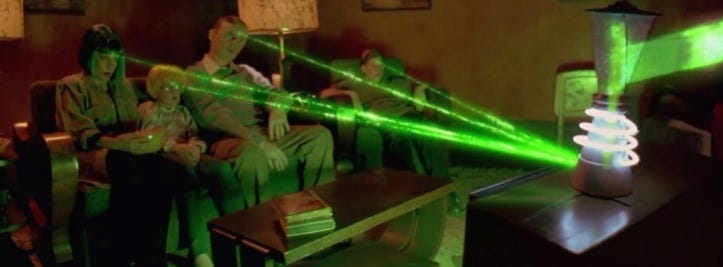
If it doesn't matter, why are you here?
If the movie doesn't matter, and my opinion of it matters even less, why did you stop scrolling to leave a comment? Short form video is the easiest thing in the world to move on from. The tiniest flick of your thumb moves you to the next reel. Leaving a comment, on the other hand, takes effort. Hit the comment button. Type or dictate your thoughts. Hit send.
That's how we all know that nobody comments on things they don't care about. You won't find me in the comments of a cooking video telling some woman it's just soup and questioning why she bothered with it. Because I'm not a lunatic.
No, people who do crap like this care very much. Something in that clip bothered you. You didn't like what I said, but you couldn't verbalize exactly why. I can guess at the reasons. Maybe you saw The Devil's Rejects once, back when it came out, and you don't remember it well enough to argue about it. Maybe you vaguely like Rob Zombie, or you liked his music in high school, and it felt like some woman on Instagram was talking shit about him. Either one would be an honest reason, and I'd respect either one more than what you actually wrote.
Some people did write some version of those things. And their comment got a heart rather than a block. Like yours did, Ashton. I'm especially irritated at Ashton because his bio says he's an Army veteran. I expect better. Even from Army pukes ;)
And yes, I'll grant the obvious. That reel was ninety seconds pulled from a forty-minute video. You didn't get my full argument, and you didn't get the parts where I give Zombie the credit he's earned as a filmmaker. If you'd written "I don't think that's what the movie's doing," or even "I'd need to see the rest of your argument," we'd be having a conversation, and I'd have been glad to have it.
Instead of telling me why you disagreed, you told me I shouldn't care. That's laziness, and more than that, it's malice, because the point is to make me feel stupid for having an opinion at all. On top of that, it's a pretense, because you're claiming not to care in a comment you took the time to write.
Every man who tells me it's just a movie has a list of movies that changed his life. The ones he watched with his dad and can still quote line for line. There's a book he read at fourteen that changed what he thought a man was supposed to be, and if I trashed it in a video, he'd be in my comments with a thousand words about why I'm wrong. Maybe The Devil's Rejects didn't make his list, and that's his business. He still knows what it feels like when a story changes something in him, and he knows I'm right that it happens.
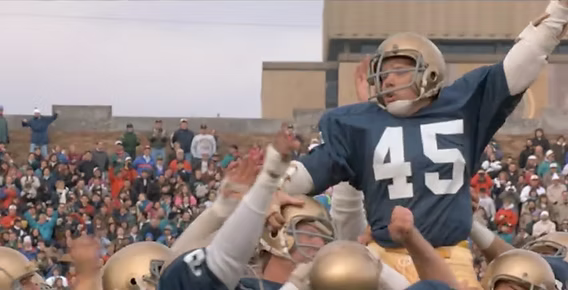
Cringe on purpose
The worst use of "it's not that deep" is the deliberate one.
Gen Z gave us the phrase, and they mostly say it out of fear. Caring about anything in public risks being cringe, and they'd rather never commit to a take on a movie than get laughed at for one. Millennials picked up that phrase from the younger cohort and started using it on other people. They grew up treating sarcasm as proof of intelligence, and they learned that if you act like someone is embarrassing herself, she'll usually stop talking.
"It doesn't matter" is a shaming tactic. If you can convince the person arguing with you that caring is cringe, she backs off, and nobody's left to object to whatever you do next.
The same studios and critics who'll tell you a movie is just entertainment the second you object to its message have spent decades deliberately putting messages into movies. They know stories form people, which is why they work so hard to control them. Telling you it isn't that deep is how they get you to stop paying attention while they do it.
The thing is, I almost prefer the malignant cultural Marxists to the disingenuous prats who bloviate about how it's just a movie, it's just a kid's show, and it well and truly isn't that deep... even as they participate in social media trends showing how deep it is.
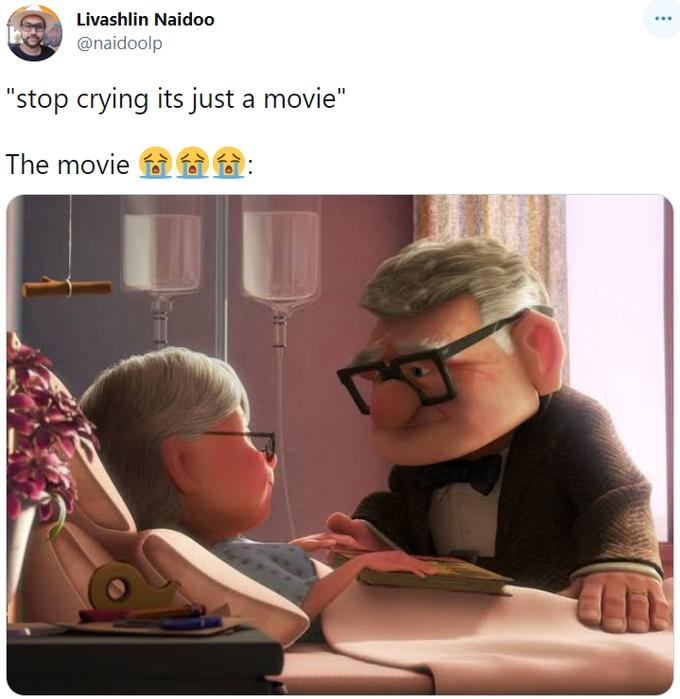
So yeah, I blocked them, and I'll keep blocking anyone who lies in my face and expects me to thank them for it. We were all formed by stories and they continue to influence us every day of our lives. Tell me I've got it wrong. You can even tell me I'm dumb or that you hate my earrings (first of all, how dare you). But don't tell me it doesn't matter. We both know that it does.
If you didn't catch my full video, Rob Zombie Hates You: The Devil's Rejects & Firefly Trilogy, is up on the channel now.
Written by

Join Us
Free subscribers get weekly essays on morality, culture, and character through fiction. Paid subscribers get everything.






Member discussion