If you ask an American under 40 to define American culture, you may find yourself confronted with the world-famous Gen Z Stare. Many will stall out completely. "I mean, like, you know... it's whatever." If you get one who fancies himself a right-wing edgelord, he may be slightly more coherent. "It's based, man. We go hard, you know. Cuz it's either go hard or go home." But the majority, having been indoctrinated in our now-embarrassing public schools, will list off an inventory of sins, slavery being the first and foremost, followed by the lack of accommodation for disabled queer folx or whatever else their professor emphasized that semester. Native Americans might get a mention, but I'm not sure if that's fashionable this year.
Two full generations have been taught that cataloging America's failures is the same thing as understanding America, and the results are exactly what you'd expect. A cohort of dead-eyed idiots embarrassed and ashamed to be American while being unable to even explain what it means to be one.
In the wake of 9/11, journalist Leonard Pitts Jr wrote an op-ed for the Miami Herald ostensibly addressed to the perpetrators of that heinous attack: Let me tell you about my people...
It was perhaps the last time in living memory when any American was treated to a positive and accurate description of who we are and why we are great.
But before that horrible day, a day we honestly never recovered from, we had a longer, more complete explanation of what American culture is and who Americans have always been. It came in the form of a 1995 Richard Dreyfuss movie about a high school music teacher.
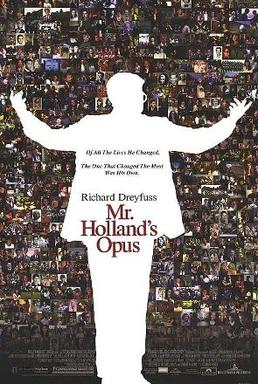
Mr. Holland's Opus often gets filed under the category of boomer slop, mostly by the aforementioned right-wing edgelords. Boomers are bad; they have an overly rose-colored view of their own virtue, ergo anything taking place in the 60s and 70s is bad. That's the entire indictment, because a movie set in the past that likes its own people must be propaganda, whether for the country or the people who were young adults during Vietnam.
And I suppose in a way, it is propaganda. The movie had an agenda, alright: to remind young Americans of who we are as Americans, and how we, above all other humans, have the ability to be heroes, in ways big and small.
The movie starts in the fall of 1964 and the makeup department worked overtime making then-48-year-old Richard Dreyfuss into a 30-year-old Glenn Holland. He's a working musician in Portland, Oregon, with one ambition: to compose a single great piece of music before he dies. He takes a teaching job at the newly renamed John F. Kennedy High School for quick money and free time. He figures a few years of easy work will buy him the space to finish his symphony.
Unfortunately, he hates the job, something a lot of us can relate to. He's bad at it, he doesn't like the kids, or specifically their lack of talent, and he watches the clock throughout the school day. His principal, played by the glorious Olympia Dukakis, observes, "You're the only teacher I've seen who sprints to the parking lot with more speed and enthusiasm than his students." He can't wait to be done with this crap, and luckily, his wife Iris supports the plan to get out the moment the composing pays.

But then life happens to him, and continues to happen to him throughout the movie. Spoiler alert: he never achieves his dream of becoming a composer.
Iris gets pregnant. Their son Cole is born completely deaf, and in that era, giving a deaf child language means an expensive specialized school, which means the symphony money becomes tuition money. Holland stays in the job he never wanted, including teaching driver's ed in the summer at great peril to his safety. He does this because his family needs the paycheck, and like the rest of us, he isn't always graceful about making that sacrifice.
Glenn is a flawed hero of the story. A bit of dick, actually. We like him, and understand his resentment for the job. We're all less understanding when it comes to him resenting his deaf son, and his wife's advocacy for their child. Through it all, we are made to focus on what he does. He keeps showing up, no matter how much he hates his job or the people he works with.
And then he gets good. He gets good at a job he took under protest, which is a distinctly American achievement. No, he wasn't a "born teacher." This wasn't something he naturally fell into. It was his job, his task, what he needed to do in order to support his family, and support his dreams. Part of what makes him good is that he makes the job his own. He shows them chord progressions in the rock and roll they already love, instead of cramming Bach down their throats. I wasn't there, but my dad informs me that rock n' roll was deemed satanic by a good number of respectable adults at the time.
The vice principal objects to the method, concerned they'll have an uprising among the parents. Holland pushes back with respect and stays inside the lines while doing it. He teaches a hopeless clarinet player named Gertrude Lang to stop reading the notes and "play the sunset," a reference to her father's love of her hair color.
He also gets a dose of humble pie in the form of Louis Russ, a sweet-tempered idiot who needs a passing grade in a class to be eligible to wrestle. Doing a favor for his friend (the wrestling and football coach), Glenn insists the kid, no matter how hard-working and willing, has no musical talent and he can't teach him to play an instrument. "Then you're a lousy teacher," his friend flatly says.

So he tries something else, and then tries some more, and he teaches Louis to play. And he gets his passing grade and goes on to be an all-star wrestling champ.
Now, returning to the boomer slop charge, which assumes the movie is comfortable nostalgia that skips the hard parts. It doesn't. The movie skips forward a few years and shows Louis Russ coming home from Vietnam in a casket, and it puts Holland at the funeral. He brings a current student with him, a smart and musically talented student who just can't be bothered to try. He's above trying. He's better than this stupid crap when something as important as Vietnam is going on.
Holland brings him to the funeral and tells him about Louis. "He wasn't smart like you. But he was always willing to work hard. To try." And the young man, so sure he was above it all, can look around and see the large group gathered to mourn Louis, killed for no reason, far, far too young.
Another time jump, and John Lennon has been murdered. Strangely enough it causes an argument. Because Glenn assumes that his now teenage son doesn't know who John Lennon is, and can't possibly understand why Glenn is devastated.
@stepsbysteps247 MrHollandsOpus FilmClassic 1995Movie SoundtrackOfLife ThePowerOfMusic InspirationalFilm MovieMoments TimelessTales MusicEducation StandByYourPassion TeacherLife CinemaNostalgia EmpoweringStories CantStopTheMusic CultClassic FilmReview EmotionalJourney ArtInspiration CinemaMagic #FilmSociety
♬ original sound - Stepsbysteps247 - MaKK DoGG
He also can't actually speak directly to his own son because he hasn't tried to learn sign language in any meaningful way, so his every word has to be translated by his wife.
The turning point comes at the most controversial part of the movie: Rowena, a beautiful student with a gorgeous singing voice. Glenn, deep into a marriage strained by exhaustion and a child he struggles to talk to, falls into an emotional affair with her. He writes a piece of music and names it for her, and when Iris finds the sheet music, he lies to his wife's face about whose name is on it. Rowena is young and earnest and the crush is reciprocated. I don't think it's a physical crush but more a spiritual one. She feels he's the only one who understands how much she loves music and how trapped she feels in Portland. She wants to go to New York to sing professionally, and one night at the piano, she says she wants him to come with her. He can fulfill his dreams. He can make great music, just like he always wanted.
And for a while he lets himself dream it: leave all of this behind, go make great music, become the man he was supposed to be before a job filled with other people's kids and the family he not-so-secretly thinks has held him back.
But he doesn't. He does indeed meet Rowena at the bus station like they planned, but he doesn't have a suitcase with him. Instead, he gave her the address of his friend so she can stay there free of charge. "He and his wife are expecting you." Rowena is disappointed. She genuinely wanted him to go with her. He had that option available to him. And he chose to stay.
That's the important bit because there are a lot of people patting themselves on the back for their virtue, even though they've never been given the invitation to sin.

Glenn finally stops treating his actual life as an obstacle to his real one. He makes sure young Rowena can go pursue her dreams, safely. And he stays home, where he belongs. Scripture has a phrase for this, and even the atheists probably know it: when I became a man, I put away childish things. And he does just that, no longer segregating his teaching life from his home life. He puts on a concert with his orchestra, and works with the teachers at his son's school to make it engaging for deaf children. They use lights to show the beats of the music, and then after the orchestra plays, Glenn stands on the stage and sings "Beautiful Boy" while signing every word to Cole. It's ostensibly to celebrate John Lennon's life, but really, it is to celebrate his son and apologize for his absence, to recommit to his beautiful boy and promise he will be the father he always deserved.
Holland kept dreaming and kept striving until the day he retired. He just aimed the striving at the life in front of him, at his wife, his son, and thirty years of other people's children.
And he is rewarded. On his last day, after being forced to retire because of budget cuts, he's cleaning out his office with Iris and Cole (now a grown man himself). On the way out to the car, Holland walks past the auditorium and finds it packed with three decades of his former students. Gertrude Lang, the clarinet player who couldn't find the beat, is now the Governor of Oregon, and she and Iris planned a huge sendoff for the teacher who made such a big difference in her life.

She stands up and tells him the truth of his own life.
Mr. Holland had a profound influence on my life, on a lot of lives I know. And yet I get the feeling that he considers a great part of his own life misspent. Rumor had it he was always working on this symphony of his. And this was going to make him famous, rich, probably both. But Mr. Holland isn't rich and he isn't famous, at least not outside of our little town.
So it might be easy for him to think himself a failure. And he would be wrong, because I think he's achieved a success far beyond riches and fame.
Look around you. There is not a life in this room that you have not touched, and each one of us is a better person because of you.
We are your symphony, Mr. Holland. We are the melodies and the notes of your opus. And we are the music of your life.
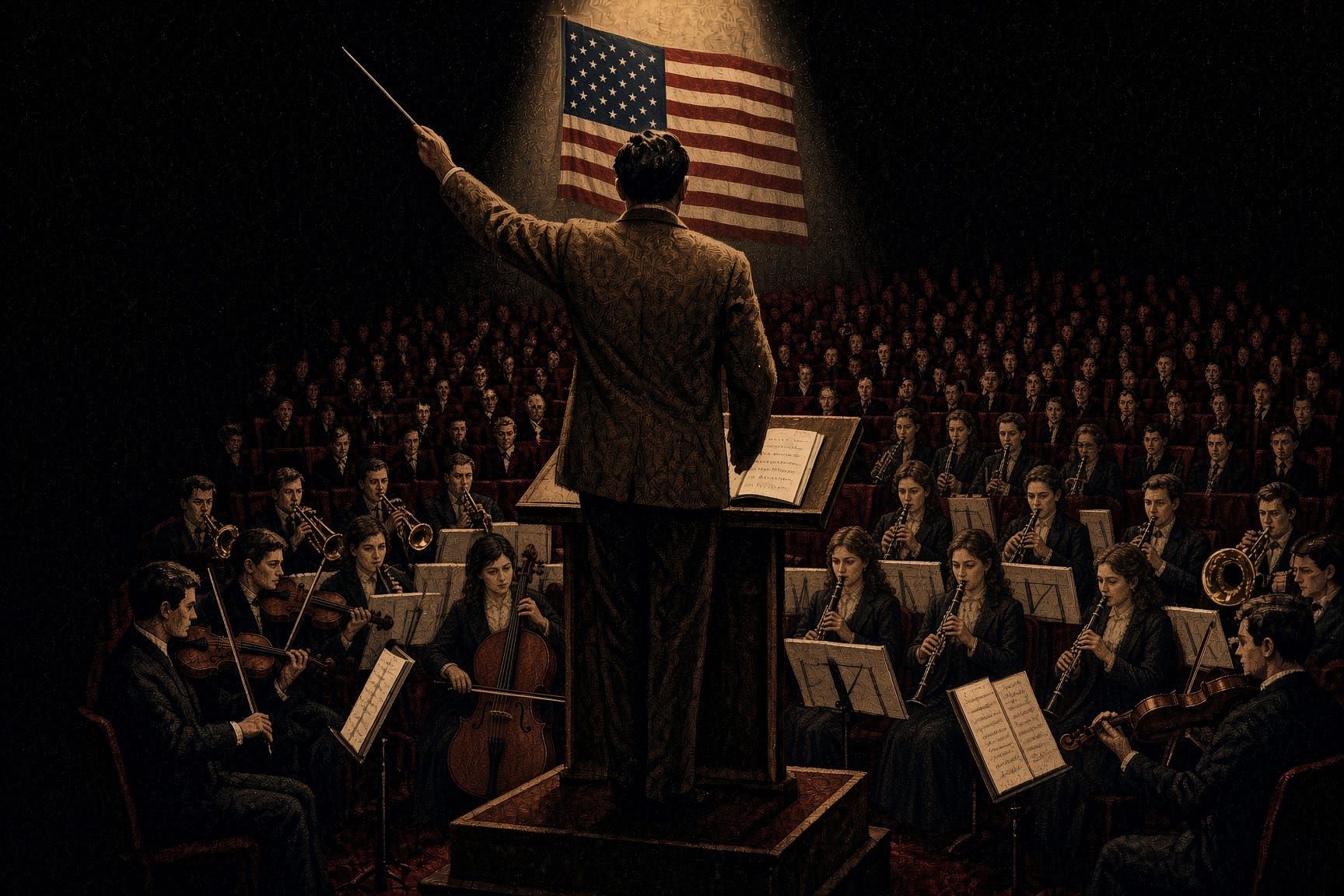
Then she sits down with her clarinet, and an orchestra of his current and former students performs the composition he assumed no audience would ever hear. Holland conducts it. He gets to hear it exactly once, played by the human beings his excellence produced.
The piece is titled "An American Symphony." The movie told you what it was about the whole time.
Glenn Holland is the quintessential American, and through his actions, we see our culture.
An imperfect one to be sure, but one that seeks excellence in ourselves, and in those who come after us. Like Glenn, we will sacrifice. We will be unselfish. We will do the hard thing and put aside our childish wants to ensure a smooth foundation for our kin and kind. And like his students, we will also fuck up. We will be loud-mouthed, boorish dick heads, though hopefully for the minority of the time. And when we are corrected by our elders, who have shown their investment in us, we will accept our lessons. And when it comes time for our elders to pass into retirement or from this life, we will thank them for their service and sacrifice, and ensure they know what it meant to us. While ensuring they also know that the world is in good hands. Our hands. Steady and ready, because they taught us to be.

This is who we are. Who we have always been. And I have no patience for the disingenuous adults who pretend not to know that. Though I am trying with all my might to give grace to the children who genuinely don't know. Who were never taught. Who were never allowed to look at Mr. Holland's Opus and see the city of Portland as it existed in earlier years, and notice that Portland doesn't look like that anymore.
Or if they do notice, they have a ready place to point the blame. Imperialists, white supremacists, fascists. All those hideous words to describe her own country--while never realizing the current state of Portland is what happens when you abandon American ideals, rather than committing to embodying them.
The city that gave us Glenn Holland's school burned through more than a hundred consecutive nights of riots in 2020, decriminalized hard drugs by ballot measure, then partially reversed course a few years later once the bodies made the policy awkward. There is enormous social pressure to describe what happened to Portland as "different," or "still good, just in different ways," and I decline. Portland today is worse. It is disgusting and it is dangerous, and every person reciting the approved euphemisms has walked past the evidence themselves.
A city like the Portland of 1965 gets built and maintained on purpose. Generations of unremarkable men and women did their jobs, raised their kids, and gave a shit about the block they lived on, and a functioning civilization was what all of that unglamorous effort added up to. Then we raised generations who were taught that those men and women were bigots, that their institutions were oppression, and that their patriotism was ignorance, and we are now watching what happens when the heirs of a great inheritance believe the people who left it to them were villains. They let it decay, and they call you names when you notice.
This is what anti-Americanism actually costs. That's what happens when you decide the elder generations have nothing to teach you and everything they say is stupid and wrong.
Yeah, yeah, Pop-Pop is a little clueless about the modern job market (No, sir, you can't actually walk up to the receptionist and demand to speak to the hiring manager to show you have gumption). But he has a lot to teach you if you listen. And I can promise that you'll be better off if you do.
One thing the olds understand is that your life, who you are, is judged in the broad view. Who are you over time? What do your actions over decades tell us about what your priorities were? Your values? Your morals? You can yap on TikTok all day about how awesome you are and how bad [whatever zoomer celebrity you're mad at] is. But the proof is in what you do, and how often you show up to do what needs to be done.
The verdict comes back in the form of the whole record. There's a saying with a disputed origin story: "A society grows great when old men plant trees whose shade they know they shall never sit in." No matter who first said it, the men who came here and built this place in the wake of rebellion knew the spirit of that saying and took it to heart. And they taught it to their sons, and they taught it to theirs, all the way down.
And now it's our turn. Even if it's hard or unpleasant, or downright thankless.
That is what Glenn Holland did, and the movie bearing his name urged us to do the same.
That is what we are all called to come together and do. That is the American Symphony.
Free subscribers get weekly essays on morality, culture, and character through fiction. Paid subscribers get everything.

Member discussion