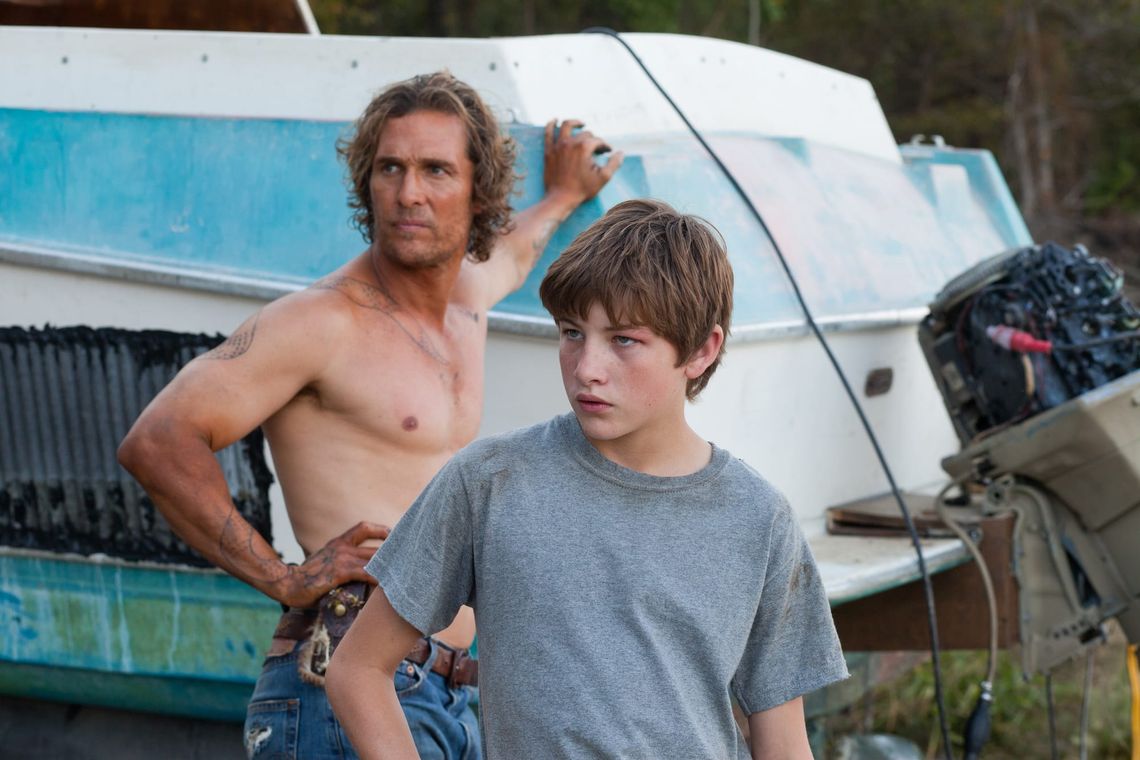
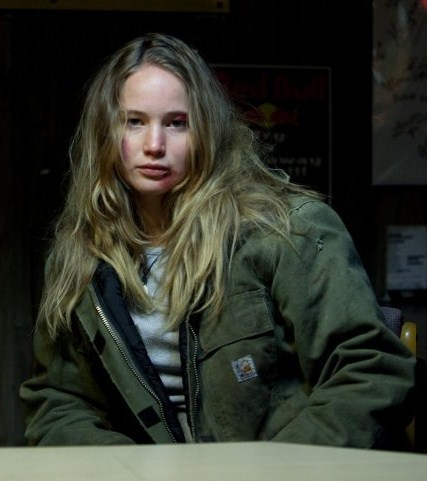
From 7th to 10th grade, I lived in a place that looked like the world of Winter's Bone. I wasn't as poor as Ree Dolly. We had laundry machines, for instance. We also had meat that didn't come from the woods. But I recognized every single person in that movie. I recognized the neighbors skinning a deer in the driveway and the chained-up dog eating scraps from the fridge and the girl who knew, before she was old enough to drive, that no one was coming to save her. That girl could have been my friend.
It's a sharp contrast to how I feel when I look at young women on social media these days. Very often within just a few sentences from the mouth of an under-35 woman, I feel my lip curling. "Who are these people?" I ask myself. "How did they get like this? Who taught them this is what a woman is, or what she should aspire to?"
Having been a tomboy my whole life, I understand that the content these girls make is not made with me in mind. And the creators would happily agree. You know the kind: The sprinkle-sprinkle lady, the tradwife cosplayers, the "I'm just a girl" gigglers who brag about not being able to drive, manage money, or make decisions. It's all the same model of womanhood with different branding, and far, far from what I was raised with.
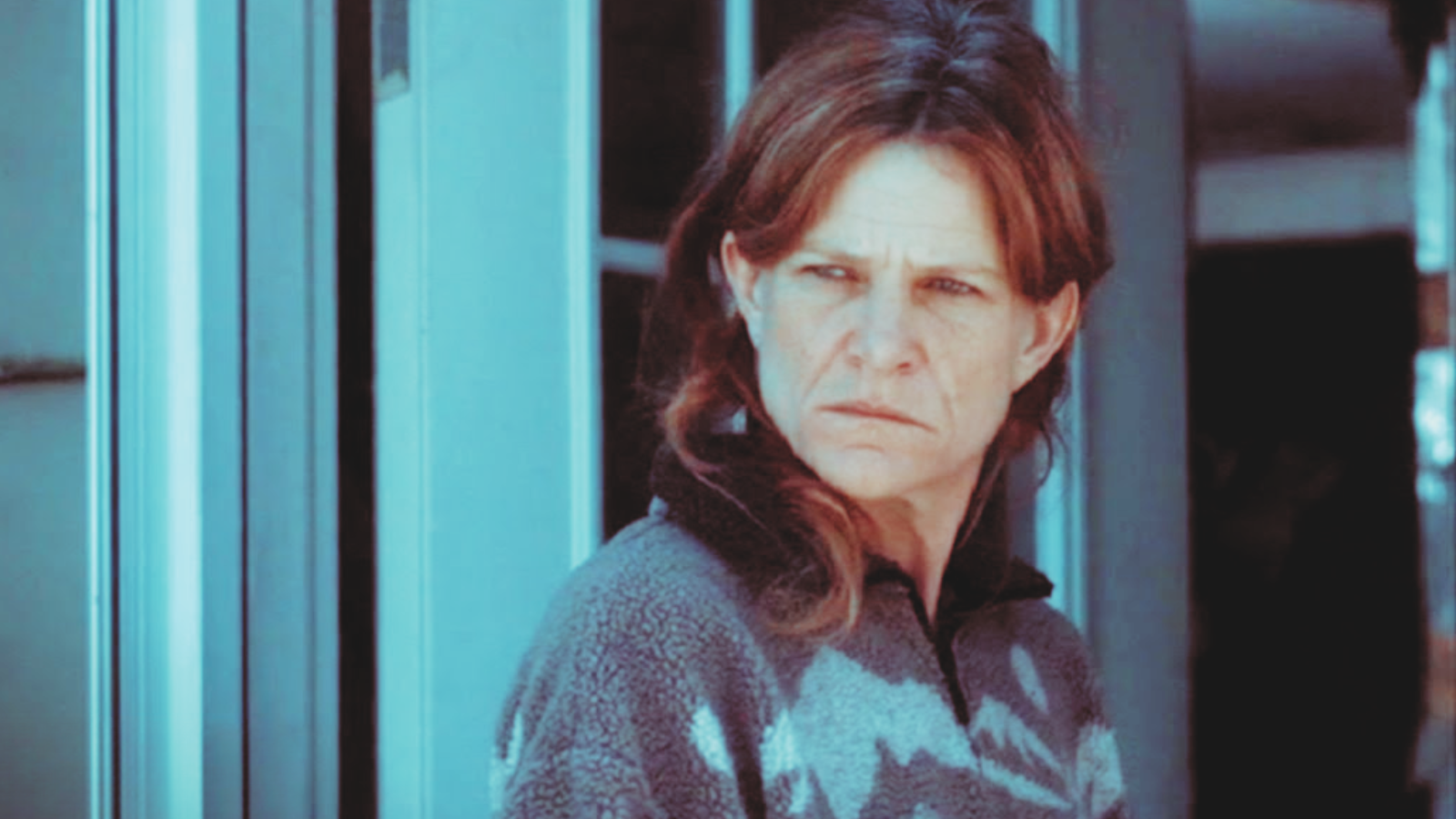
So it was strange to watch Debra Granik's 2010 film for the first time and resonate so strongly with how the women behaved. I had been reliably informed by every single review and thinkpiece about the movie that Winter's Bone was a feminist story about a brave girl defying a patriarchal system. But that's not what I saw at all.
Instead, this movie, taking place in a white trash meth town, showed a fully operational model of feminine authority, the kind that has been so thoroughly memory-holed by modern culture that most people watching this film couldn't even see it. And no wonder. Because if you go looking for femininity content on any social media site, the model of it you'll be presented with will look more like prostitution with extra steps than mature, independent adulthood.
I'm not girly, and I'm not rich, so I pondered for a moment if I had just missed out on what most girly girls aspire to. But it isn't; I see that now. I think the modern model of feminism/femininity is much more nefarious.
Ree Dolly Ain't a Feminist. She's Just a Girl
The setup to Winter's Bone is simple in its desperation. Ree's father, a crank cooker, signed the family home over as collateral for his bail bond. Then he vanished. If he doesn't show for his court date, the bail bondsman takes the house, and Ree, her two young siblings, and her catatonic mother are out. She's seventeen, has no money, no father, and a mother who can't speak. The Army was her only way out, and she can't even enlist now because she can't leave the kids. Nor (as the kindly recruiter explains to her) can she take them along with her.
So she goes looking for her father herself. There's literally no other choice.
Even 15 years ago, most of the reviewers leaned into the woke reading of her actions, concluding Ree is a feminist hero because she's doing something brave and hard and determined to push back against male authority. But that isn't what she's doing, not at any point. She's looking in places she knows she shouldn't go because the men won't.
It's their role to do so. Her uncle, her cousin. Hell, men who knew and worked with her father. It is their role to find him, not hers. Everyone knows that, which is why Ree is so angry and baffled that the men are shutting her down. The thing about this poor, white town is that everyone knows what their responsibility is. When Ree drives to her friend's home, she waits outside until the husband invites her in. Does that sound like a feminist? The rules are all unspoken, but they come through loud and clear throughout the movie.
Every man Ree approaches on her search either warns her away or threatens her, and it's obvious from the get-go, it's not because they hate girls and women. Her cousin's husband and neighbor, grabs her from her living room and drives her to a secluded cook house to "have a talk." Her uncle, Teardrop, snatches her up and screams in her face. Both men are mean. They both do drugs. And they're trying to scare her, because whatever she wants to go chasing is going to get her killed. Or get them killed.

Now we've all seen enough movies to think we know what's gonna happen when Ree knocks on the wrong door one too many times. But in this movie... you'd only be half right.
When Ree finally oversteps and shows up at the wrong house demanding answers (for the second time), the men don't touch her. The women drag her into a shed and beat her. Merab (played by Dale Dickey) and the wives and mothers of the men Ree is hassling, take it upon themselves to discipline this girl. Because Ree, a teenage girl who is overstepping her bounds, is their responsibility. Not the men's.
And make no mistake, it's a nasty beating. Teeth are knocked out. Her eyes are swollen nearly shut, and she can barely speak through the pain. The men are there in the shed, but they don't touch her. They're only there to let her speak her piece and decide what to do with her.
As the discussions are underway, Teardrop shows up to collect his niece, quite unexpectedly. And when he sees Ree, the first thing he asks the men: "You hit her?"

Merab speaks up immediately, sounding almost offended that he would think that. No man laid a finger on her. The women did the beating. It's very clear from the way she speaks, and the expressions on the men's faces that they don't rush to reassure Teardrop out of fear. It's because it would be shameful. And they (crank-peddling murderers) don't want that dishonor on their name. For a man in that community to put his hands on a teenage girl, one of their own, would violate the code they live by.
That is women's business. Women's responsibility.
And he accepts their word. Because even a crank-dealing man's word means something.
Bone-Deep Virtue
It's easy to get hung up on the fact that this takes place in a meth town, but that's almost irrelevant to the way the gender relations are structured. They had the same underlying culture and discipline that I saw in my own church community, military community, and extended family: one that had separate but equal responsibilities for men and women.
The women of Winter's Bone are not in charge. Nobody would describe this community as a matriarchy. The men make the decisions about life and death, about territory, about who gets to cook and who gets buried. The men of the community decide, eventually, that a resolution to Ree's problem can be found. The hierarchy is clear and nobody pretends otherwise. They certainly don't make TikToks about how unfair it is.
But within that hierarchy, the women run a parallel operation that is just as essential and just as serious. They enforce behavior among the younger women and the children as a matter of survival. They also manage the emotional and social landscape of the community.
The conclusion of the movie involves Ree being taken to her father's body to collect his decomposing hands. That way, she can prove that he's dead to the court and the bail bondsman won't take her home.

If Ree had been indoctrinated into TikTok feminism, she would have said no. Hell, she wouldn't even have gotten to this point. After all, she would have been taught that everyone's job was to protect her, to make her life easy, and anyone who failed to do so was a "walking red flag" and should be cut off. All while being told she had no responsibilities to anyone, not even her siblings.
If you think I'm exaggerating, I'll remind you of the Lilo & Stitch reboot where the new "happy ending" is that Lilo goes into foster care so her big sister can go to college and live her best life. Because that's the only goal for the modern feminine woman. To do what's easiest.
Not so for Ree.
She willingly goes with the matrons to her father's body. Merab, the same woman who beat the hell out of her weeks earlier, shows up at Ree's door with other women (no men) and makes the offer. And no, Ree isn't allowed to bring her gun.
Now why would her father's murderers allow the women to do that?
If I was a gambler, I'd bet those women lobbied for it. They heard the talk around town and they pressed for a solution that would let Ree keep her house without bringing a murder charge to anyone's door. That's how it's done in communities like this. The women don't give orders. They shape outcomes. And the men, if they're smart, listen.
That's woman's work.
No, it's not about the dishes or the laundry. It's the work women do in communities where everyone carries their weight and nobody gets to sit it out because they're pretty or because they have feelings about the situation. And none of that, NONE of it, is even being discussed in what passes for feminist spaces.
Working-Class Protestants
I keep returning to the fact that this is a Missouri movie. Daniel Woodrell, who wrote the novel, is from the Ozarks. The community in the film is the poorest of the poor, rural white Americans living in a shadow economy sustained by methamphetamine. These are the people that coastal media alternately ignores and pathologizes. "White trash," if we're being honest about what the broader culture calls them.
Yet they have a moral framework about gender that actually works.
This shouldn't be surprising. These are the descendants of the same Protestants who founded this country on the conviction that idleness was the deadliest of sins. In that world, charity existed freely because the stigma against failing to pull your own weight was so strong that very few people needed it. Everyone worked. Everyone contributed. Women's work and men's work were different, but neither was optional, and neither was decorative.
Literally ALL my forebearers. We worked outside, hauling produce and livestock over long distances in what passes for summer in Ireland. The bougey, sofa-sitting wife with talons on her fingers is a new thing, one I don’t much relate to. Girl, bye pic.twitter.com/FaiuJYsyPH
— Kristin McTiernan (@Kristin_Fiction) August 10, 2023
Ree Dolly, at seventeen, provides for her family, maintains a household, hunts for food, and negotiates with dangerous men to save their home. She does this because she was raised to. Because her community, criminal and rough as it is, taught her that work is the price of belonging. The women who beat her and the women who helped her are operating from the same playbook. You carry your weight. You do what needs to be done.
Aspiring Mistresses
Now compare those women to what passes for feminine guidance online.
Shera Seven, better known as the "sprinkle sprinkle" lady, runs what amounts to a finishing school for aspiring mistresses. Her advice to young women boils down to this: extract maximum financial resources from men while investing nothing of yourself. Don't cook. Don't clean. Don't demonstrate any capacity for partnership. Just be pretty, be sexually available when it suits you, and "get your bag."
Before Shera Seven, there's a softer on-ramp. "I'm just a girl" became a cultural punchline, then a worldview. I can't do anything hard. I wasn't born to work. I'll be cute and let a man handle everything for me. I'm sure it'll be fine.
@jazzybaby99 I’M JUST A GIRL DON’T MAKE ME WORK 🥺 #bimbotok #fyp
♬ original sound - J A Z ❤️🔥 - JAZZY ❤️🔥
These are two phases of the same degradation. Phase one is infantilization. You convince young women that helplessness is charming, that incompetence is feminine, that having no skills and no ambition beyond being selected by a man with money is aspirational. Phase two is the hard pivot when reality arrives and the man who was supposed to handle everything turns out to be flawed, selfish, or just ordinary. Now the same girl who couldn't change a tire is supposed to "secure the bag" from a man she openly despises. Men ain't shit, the thinking goes, so take them for everything you can.
The whole arc, from "I'm just a girl" to "sprinkle sprinkle," is the journey from willing dependence to entitled extraction. And both stops share the same assumption: that a woman's only contribution to a household is her physical presence and sexual availability.
Sci-fi author Devon Eriksen wrote a thread on X that I think crystallizes this perfectly. He described a college exercise where students were asked to write job descriptions for "husband" and "wife" in terms of concrete, measurable responsibilities. The women handled the husband portion fine. But when the men started listing responsibilities for wives, the women lost their minds. Every expectation was sexist, every responsibility oppressive, every concrete duty old-fashioned.
I didn't go to college until I was 30. This gave me a chance to see it with the perspective of an adult.
— Devon Eriksen (@Devon_Eriksen_) July 18, 2025
One lecture in Industrial Psychology, in particular, I will never forget.
The professor spoke about how an effective job description focused on concretely measurable… https://t.co/3vEsIzn0ht
Eriksen's conclusion was these women didn't want to be wives. They wanted to be pets. A pet is a creature you keep around because you enjoy its natural behavior, not because it actually contributes. If your wife operates on the same principle, if she does things for you only when the mood strikes and never because it's her obligation, you don't have a partner. You have a dependent.
What's especially striking is that these same "dark femininity" influencers rail (and I mean foam-at-the-mouth screeching) against "man-babies" who act like a son instead of a husband. And they're right; that's gross. And it would be admirable if not for the fact that they don't actually want equal contribution. Instead they're angry because the woman should be the eternal dependent who gets babied... not the man.
The femininity coaches of TikTok and YouTube are teaching women to be aristocratic mistresses: women who provide sex and beauty in exchange for financial support, with no reciprocal obligations and no accountability.
This is a regression so total it would stun the women it claims to descend from. The great-grandmothers these influencers invoke when they talk about "traditional femininity" walked for days to buy real butter to bake the best pie in the county. They slaughtered animals. They scarred their hands making soap from lye. They nursed neighbors through diseases that could kill them. They did this without complaint, without credit, and without an audience, because the community needed it done and they were the ones responsible for doing it.
Whatever currently bears the name "feminism" has almost nothing to do with the women who fought for property rights and legal personhood, and everything to do with absolving women of the responsibilities that make them indispensable.
Brutal though their world may be, the women of Winter's Bone are the tradition. And you don't need to be in danger of starving in a meth town to continue that tradition in your own life, in your own community. Ree risked her life to continue caring for her family, but not without going through the proper channels first. Likewise Merab cut off the hands of a dead man to help a girl she'd beaten three days earlier, and she never once asked what was in it for her. She understood that being a woman in a community means something, requires something, and costs something.
The sprinkle sprinkle girls will never know her name. They're too busy looking for the path to the most luxury for the least effort. They'd rather commit to a life of dependence and uselessness, not realizing until it's too late how much of their worth and heritage as women they willingly threw away.
Free subscribers get weekly essays on morality, culture, and character through fiction. Paid subscribers get everything.

Member discussion