Otis Driftwood: "I am the devil, and I am here to do the devil's work."
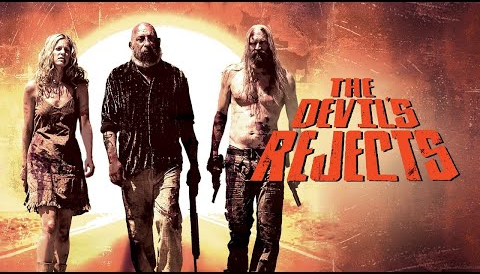
The Devil's Rejects is one of the most genuinely disturbing horror films ever made, and I've watched it exactly twice. Once in my twenties, and once last week. Both times it delivered. Rob Zombie's 2005 follow-up to House of 1000 Corpses is gorier, more graphic, and more relentlessly violent than almost anything in the horror canon. And yet it didn't destroy me the way Se7en did, twenty years ago. The violence was worse; the damage was less.
I'll come back to why.
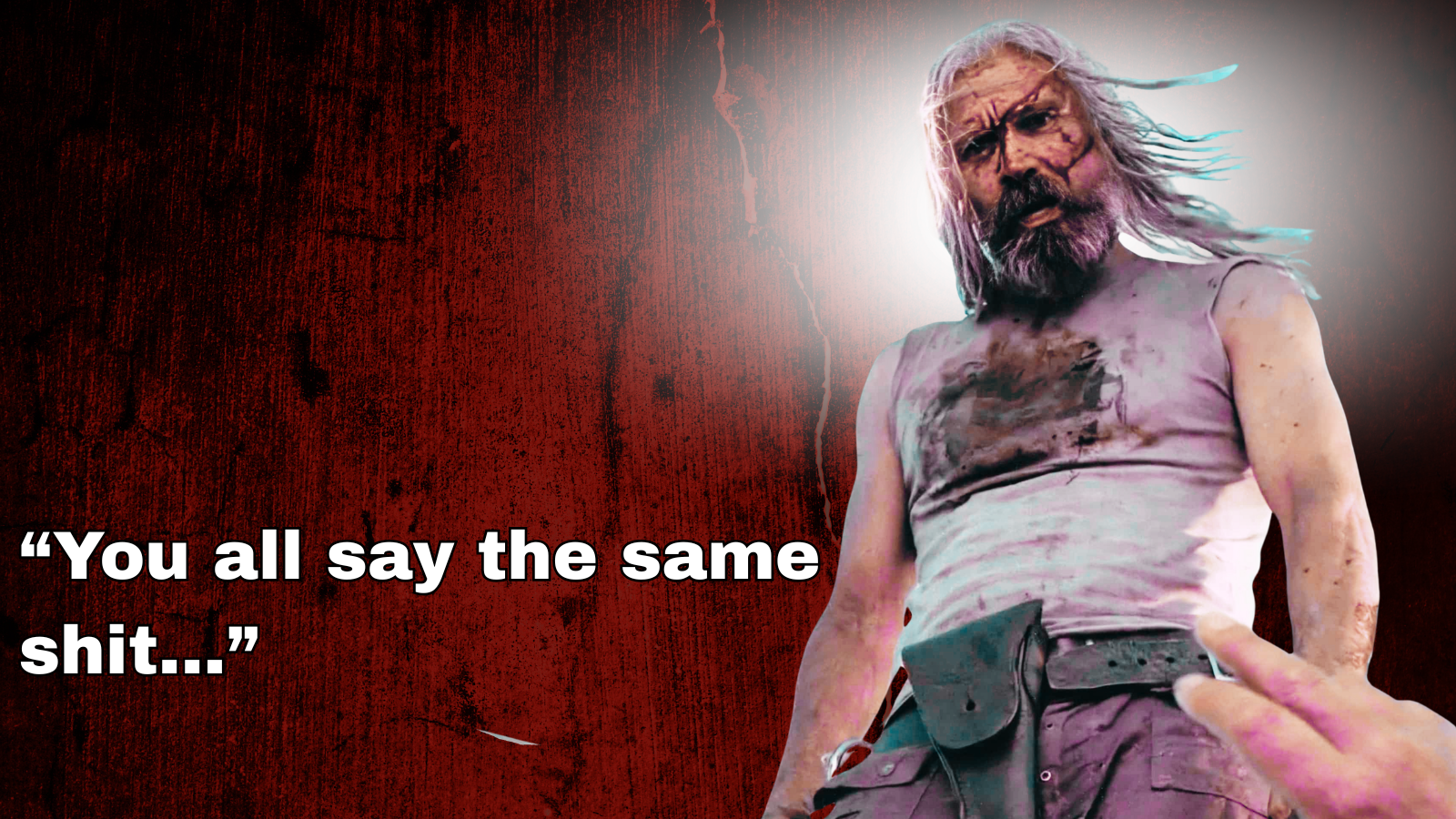
First, I want to talk about the line that made my skin crawl. Surprisingly, it wasn't what I opened with: "I am the devil, and I am here to do the devil's work," which is the one everyone remembers and quotes and prints on t-shirts. Otis, one of our three murderers who serve as the protagonists of this film (yes, you heard that right), says that line to a man he's about to kill, and it's theatrical, like a menacing line he's practiced in the mirror many times. It was scary, sure, and it gave me a chill. But it was the kind of scary where you're proudly nodding at the actor. "Holy shit, that was cold, dude. You nailed it."
There was another line that didn't get put on t-shirts and hardly registers as a blip in the internet fandom. A victim, on the ground, staring up at Otis, summons every ounce of courage he has left and spits out, "Fuck you."
And Otis, utterly unbothered, replies: "That's what they all say. 'Fuck you.' Well, it ain't gonna save you. It don't scare me none, and it don't suddenly make you a fucking hero."
That's the one. The line that ripped me out of my film critic role and put me on the ground, staring up at a murderer. The first time I heard it, I felt like my throat was closing.
Because that would have been the first thing I would say. "Fuck you." Or at least I imagine it would be. I've taken a nasty punch or two in my life but I've never been in mortal danger. In that moment, I was in that man's shoes. I think we all were (which is part of the reason why the movie is so damn good). This man is about to die, and in his final moment of agency, he reaches for the most defiant thing he can think of. Profane rebellion. A verbal middle finger in the face of evil. And it feels brave. For a fraction of a second, you think: he's going out on his own terms. He's facing death with some shred of dignity, even after everything that's been done to him.
Then Otis erases all of it: They all say that. Your last stand, your moment of valor, the thing you reached for when everything else was gone? It's a joke. Otis has heard it so many times that he can predict it, and he's bored by it.
That's the most frightening thing a villain can do on screen, what sucks you in and makes it real. More than dismemberment or torture. Because we're all so inoculated to special effects—both practical and CGI—that we can maintain that level of detachment. But all the knowing smirks and defiant scowls fall away at that moment a villain reveals, through some offhand remark or practiced gesture, that your singular, unrepeatable experience of being killed is ordinary to them.
That you, in your entirety, are a rerun.
The Second Most Common Thing
Kathryn Bigelow's Strange Days (1995) pulls this same trick, and it's one of many moments that stick with you. It didn't do well when it was first released but has become a cult classic. A lot of what it predicted came true... just a little later than 1999.
The line in Strange Days is, in some ways, even more unsettling because it comes from a character you trusted. (Look, I'm going to have to spoil the movie that came out in 1995. Sorry)
Tom Sizemore plays Max Peltier, Lenny Nero's best friend, his confidant, the guy who's had his back through every sleazy misadventure in millennial Los Angeles. And then, in the final act, the mask comes off. Lenny looks up, into the mirror in front of him, and sees the reflection of the killer he's been hunting.
It's Max, and he's holding a gun on Lenny. Like anyone would, Lenny gasps out, "Jesus."
Max, calm as a man commenting on the weather, says, "You know that's the second most common thing people say right before they die? Shit being the first."

The delivery is what sells it. Yeah, maybe he's repeating a factoid he read somewhere. But with his calm demeanor, borderline amused, actually, you get the strong feeling he's been present for enough dying moments to have gathered the data himself.
Horror movies and on-screen deaths are funny things. Out in the audience, we can endure the sight of violence in all sorts of situations. Verisimilitude is highly personal, so maybe you relate to the victim. Maybe the killer. But probably both, just at different parts of the scene. Because there's always a good reason to kill most adults (if we're being super honest about it). We can relate to the killer if he's frenzied, if he's desperate, if he's emotional–there's a twisted equality to it, between victim and killer. Both people are in extremis. Both are experiencing something extraordinary and neither of them wanted to be here, going through this.
But when the killer is calm and well-practiced at what he's about to do to you, you realize there is no equality. You probably can't relate to that kind of killer, and relating to the victim means experiencing the horror that you are the only one for whom this is a big deal.
In the Pantry
This phenomenon is why I will stand ten toes down on the FACT that Mads Mikkelsen's Hannibal Lecter is the best. No shade on Anthony Hopkins (obviously). But Mads took that role. He owns it now.
People love Anthony Hopkins in Silence of the Lambs and Hannibal (2001), and he is excellent, but Hopkins was doing a performance within a performance. His Hannibal wanted Clarice to be scared. Or in awe of him. Probably both. Hopkins' Lecter was a showman trapped in a cage, and he used every second of Clarice's attention to remind her what he was. Even in the sequel movie, there was a certain flourish in his murders, a showman having fun. Which is why we loved him in the role. He was mesmerizing, dangerous...but not scary.
Mikkelsen, across three seasons of Bryan Fuller's Hannibal, did something far worse. His Lecter doesn't care if you're scared. He's not performing for you or even acknowledging your humanity. You're livestock to him.

The finale of season 2 will forever live in my mind, and it stands as the focal point for all the show's devoted fans. Until that moment, Hannibal had been a trusted advisor to the FBI, but now the jig is up and he has stabbed Jack Crawford, the FBI agent who trusted him, and leaves him bleeding out on his kitchen floor.
Minutes later, Alana Bloom (fellow psychiatrist and his lover) shows up at the house and asks where Jack is, desperately hoping she is wrong.
"In the pantry."
Two words. Completely true. Delivered with the same mild helpfulness you'd use to tell a houseguest where you keep the extra towels. It stands in stark contrast to Hannibal's blood-stained clothes, his sweaty brow, and disheveled hair–a far cry from his impeccable wardrobe and grooming he's had until now. He might be out of breath, but he's not panicked or in a hurry. He answers her question, and then just as calmly tells her if she leaves now, she'll be fine. But if she stays, he'll kill her. Now, or whenever it's most convenient for him.
Poor Alana doesn't believe him. But we do.
Hopkins' Hannibal had a sense of flair and excitement; he was dangerous and dared you to sit with him anyway so you could bask in his favor. Mikkelsen's Hannibal served you a beautiful meal and never told you anything at all, because you weren't important enough to warn, not even if he slept with you for months, or was your friend for years. The biggest reaction you can expect from him as he kills you is, "Hmm.. that's a shame."
Why Se7en Still Wins
So. I said at the top that The Devil's Rejects didn't destroy me the way Se7en did, even though it was gorier, more graphic, and harder to watch. People who know I'm still troubled by Se7en after all these years might wonder about that. How do you sit through Rob Zombie's magnum opus and sleep fine, but David Fincher's has you looking down from a high place with a dangerous sense of longing?
Here's the thing. The Devil's Rejects is a horror film about bad people. The Firefly family are monsters, and the movie loves them for it, gives them funny dialogue and genuine camaraderie. It lets you feel the warmth between them even as they do hideous things to innocent people. But the film's darkness has edges. There are victims in this world who are simply decent and unlucky. The Firefly family is a specific, contained evil. They are a them, and there is an us, and the two are clearly delineated.
Se7en doesn't give you that. From the moment John Doe walks into the police station, covered in blood (and we will find out whose blood in short order), he makes the argument that the entire world is guilty. The seven deadly sins aren't aberrations. They are how we live. And the movie, this is the part that I can never quite get away from, the movie doesn't disagree with him. Detective Somerset has been saying the same thing in softer language for the entire film. The city is indifferent. The apathy is everywhere. Nobody cares. And when Doe wins in the final scene, when he gets exactly the outcome he engineered, the movie confirms every word he said.
Like I've said more than once: I ain't been right since.
The Devil's Rejects says there are people in this world who have heard your final words so many times they can mouth along. Maybe it's sick, but it's just a meaner, bloodier way of saying "From dust we came, to dust we shall return."
Se7en says the whole world has been repeating itself since the beginning, and you were never going to be the exception. You are bad, complicit in everything you just watched, and everything you stand in judgment of. It's all bad. And it always was.
I rewatched The Devil's Rejects last week and I'll probably watch it again. It's a genuine piece of craft, full of awful funny moments and performances that have no business being that good in a movie that filthy. It's a great horror film.
Se7en is a great horror film that I will never watch again. One psycho I can handle. Even three. Sure, splash on some face paint while you kill folks. Go nuts.
But the whole world and everyone in it being, at their core, a terrible combination of evil and unexceptional... that's not something I can sit for a second time.
If I could unwatch it, pull one of those Men in Black zappers and flash the memory out of existence, I would.
Somehow, wherever he is, I think Fincher would be pleased by that.
Subscribe to get the latest articles and news
Member discussion