10 min read

Why Bone Tomahawk's Most Hated Character Is Its Real Hero

Why Bone Tomahawk's Most Hated Character Is Its Real Hero

When I first heard a horror author describe Bone Tomahawk as one of the precious few “true horror” movies made in the modern era, I was intrigued by the description.  The trailer read like a Western to me. Kurt Russell in a sheriff's vest, cowboys riding into wilderness, and of course the title itself. Whatever else this thing was, it looked like a Western. The horror framing felt off, like someone selling tickets to the wrong show.

I watched it, I think, for no other reason than to have an informed and intelligent-sounding rebuttal to the creator’s assessment. Though having seen it twice now (there’s simply too much to soak in for one viewing), I must agree with the classification, even if it only applies to the third act. That being said, the horror framing was not the most interesting thing about the movie. And neither was the joy at seeing Kurt Russell playing a western lawman once again.
Bone Tomahawk (2015)

Bone Tomahawk is a Western that takes seriously the question of what men are capable of when civilization thins out, and the answer it gives is the one audiences don't want.

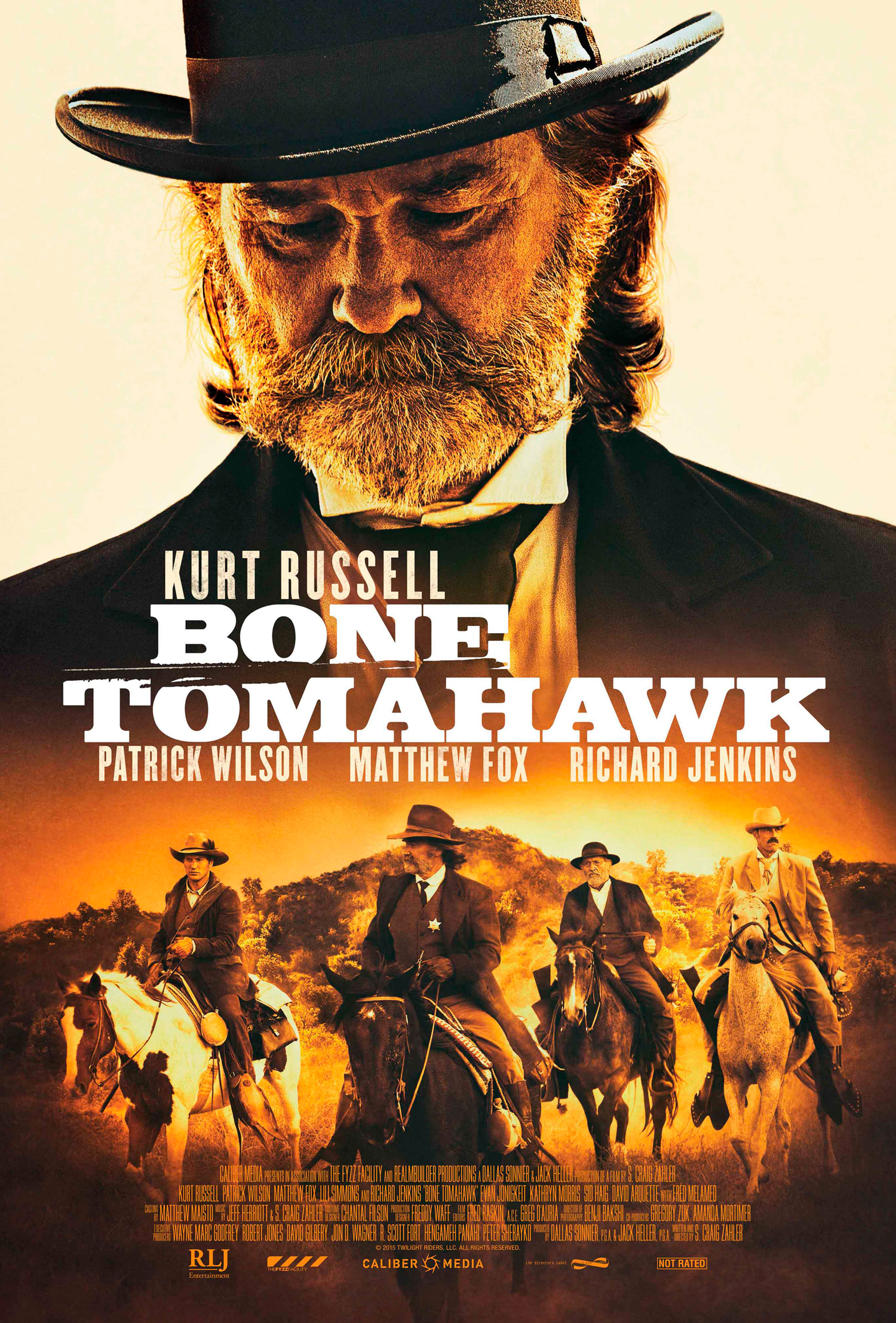
The setup is simple. In 1890s frontier country, a cannibal tribe attacks the town of Bright Hope in the night and disappears into the wilderness with three of the townspeople, including Samantha O'Dwyer, the town's nurse. Sheriff Hunt (Russell) assembles a rescue party of four: himself, Chicory the back-up deputy (played by Richard Jenkins), Arthur O'Dwyer (played by Patrick Wilson), riding on a broken leg to retrieve his wife, and John Brooder (played by Matthew Fox). They ride out, determined to bring back Mrs. O'Dwyer and the missing deputy.

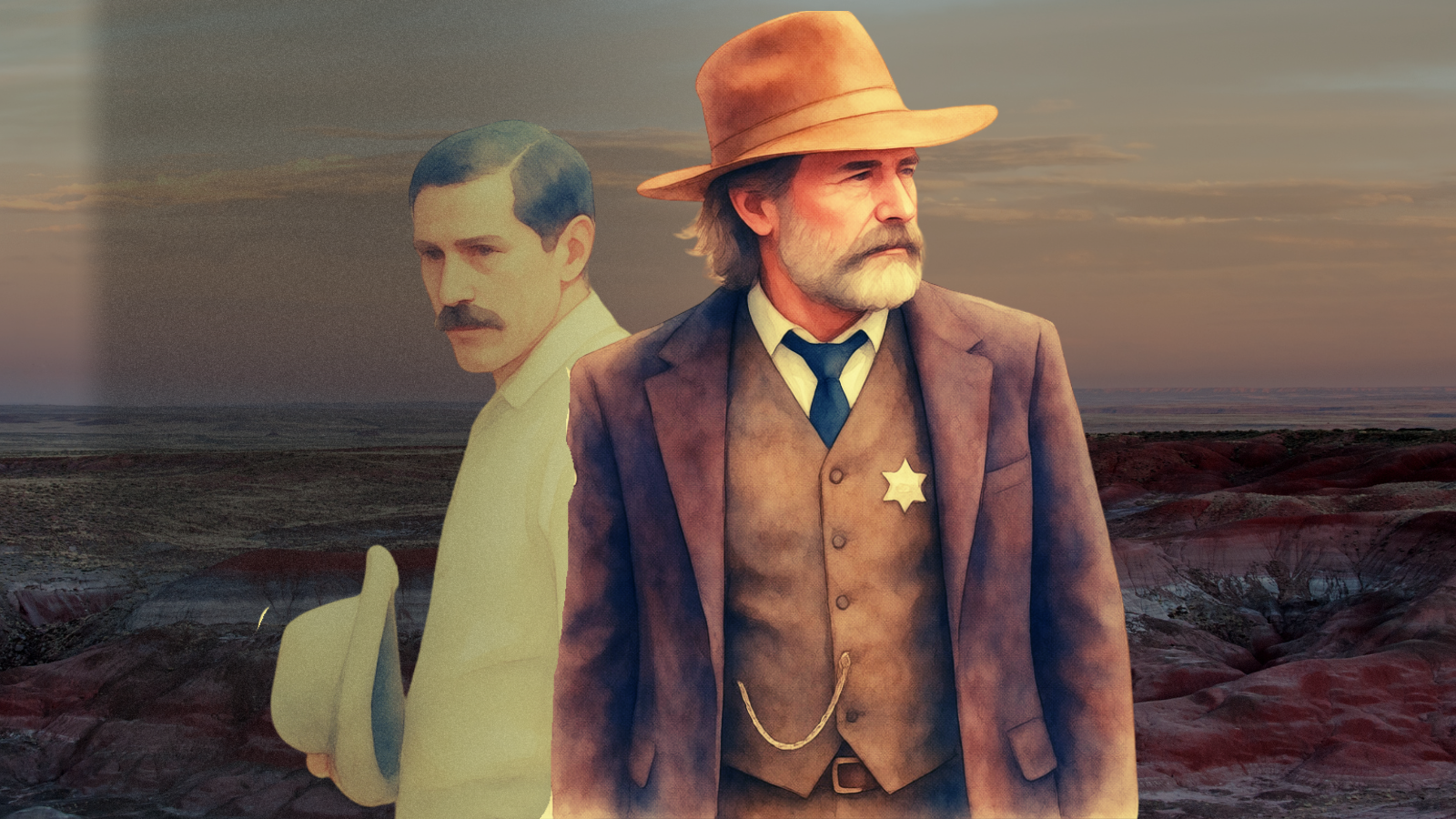
Like all movies, this one has a hero. Critics and casual viewers will tell you the hero is Sheriff Hunt. But I almost regret to inform you that the hero of Bone Tomahawk is John Brooder, the dandy gunslinger in the four-piece suit. Though I suspect not even the scriptwriter noticed.

The Mission Isn’t Possible without Brooder

In the scene after the town realizes Mrs. O’Dwyer has been taken, the initial party Hunt assembles is nothing short of embarrassing. This is a small town, and all of the roughneck men with the means to help have already left for work on the railroad and driving cattle. Hunt has to work with what he has, and he selects three men… who we know will probably end up dead. 

O'Dwyer is going because his wife is gone, and he'll drag a splinted leg through every mile of country between Bright Hope and the caves to get her back. The man is admirable, obviously deeply in love with his wife. And he’s strong and capable too… when he’s ambulatory. But right now, he’s not in operational shape, hence why he’s still in town at all.

Chicory is going because Hunt is going. The mission itself is incidental to him. He's a sweet old man who quotes scripture and tells the kind of long, meandering stories that men with no current responsibilities tell. Hunt himself is a small-town sheriff and likes it that way. His professional life has been handling drunks at the saloon and writing up boundary disputes. He’s honorable and methodical, but he hasn’t, before this week, spent a serious moment of his life beyond the town limits.

Brooder is the only volunteer with an actual record. 

John Brooder: I should go with you, since I'm most experienced with killing Indians.
[brief pause] That's not a boast. That's a fact!

The assembled townfolk, including The Professor who, (I presume), is its sole Native American resident, look distinctly uncomfortable at what he just said, but they already know his reputation. 

Make no mistake, John Brooder has killed many Indians. He says so without elaboration or bragging the way an insecure man brags. Nor does he apologize for it the way a guilty man apologizes. He killed Indians because they, in the places he was operating, were trying to kill him. We also find out later that they killed his family too. There’s a grudge, and he doesn’t shy from it.

The film handles this without any interest in making it comfortable. Modern criticism wants to place Brooder in one of two categories: the racist whose body count indicts the whole project of westward expansion, or the frontier hero who deserves uncomplicated sympathy for killing savages. Maybe 2015 slid in just under the wire of woke because the film rejects both those easy classifications. Brooder killed Indians because they were his enemies. The hostility ran in both directions and neither Brooder nor the film pretends that only one side's hostility was righteous.

What the film does, with real care, is separate the cannibal tribe from the Indians Brooder fought in his earlier life. The Professor refuses to call the troglodytes "Indians." He calls them a spoiled bloodline. He wants nothing to do with them, and neither do the surrounding native communities. They're an aberration, denounced by every tribe in the region. And avoided like a plague.

Luckily, Brooder also owns the horses and rifles. He’s spent years of his adult life in the country the others are about to ride into for the first time. Nobody on this trip is coming home unless he rides out with them, which is the only reason they permit him to come at all.

The other three would have died inside of two days without him, and the film is not subtle about this. Though it isn’t his wife that was taken, and there is no hidden attraction or agenda, Brooder runs the mission. The other three just follow.

That’s what makes him the hero of the first hour. The second takes a much darker, but even more heroic, turn.

I Want You to Know… It’s Not Because You’re Mexican

The Mexican scene is the film's clearest statement of Brooder's moral architecture, and the audience usually flinches at it.

Two Mexicans approach the camp at night, setting off the tripwire only Brooder thought to set up. They walk in with hands visible, smiling, offering friendship, ignoring Brooder’s pistols pointed their way. Chicory is delighted. Oh how lovely to have good Christian men for company.

The Mexicans have nothing to gain from a friendly nighttime visit to four armed strangers in the wilderness. It’s not something an earnest fellow traveler would do, unless he were starving or dying of thirst. These men are well-fed, well-armed, and want for nothing.

Well, nothing Hunt’s party would care to part with, anyway. 

Brooder kills them without hesitation, while they both stood there with their arms raised and smiles plastered on their faces.

“He was wearing a crucifix!” Chicory screams, voice cracking with genuine moral injury. So the fuck what? I yelled back at my television. There is much to be said of the Christian command of charity and welcoming the stranger, but the opening scene of the movie made it very clear that this is a land of savages, skin color be damned.

The two men were going to wait for their opportunity, kill the party in their sleep, and walk away with the horses and the supplies. They only approached to case the opposition before their strike. Brooder didn't need to wait for proof that his suspicion was correct because there was no other reasonable explanation for the encounter. 

The film tells you he is correct, maybe because a modern suburban audience doesn't understand this savage place any better than Chicory. Proof postive was found that the men were exactly what Brooder said they were, and still Chicory did not relent in his uncharitable opinion of the man who saved his life.

The “Christian” thing to do was, apparently, to submit to murder.

Opening on Gore

I mentioned the film’s opener, and it’s a brutal one. The first shot is of a knife sliding across a man’s throat and the accompanying sounds as he gags on his own blood and sinew. Two men, Purvis and Buddy, played by David Arquette and Sid Haig, cut the throats of travelers for paltry supplies. Not even horses or gold. Just bedrolls, coffee, and tobacco–and this was no surprise to them. They knew exactly how meager the take would be when they killed four men in their sleep. The point of the opening is that the world of Bone Tomahawk does not contain a baseline of civilization that strangers can be presumed to share. The wilderness is full of men who will kill you for almost nothing.

Brooder knows this. He’s been out in it. The others, Hunt and Chicory and O'Dwyer, have spent their adult lives inside the small comfort of Bright Hope, where the sheriff's office and the church and the saloon have organized human conduct into a calm veneer of gentility. Hunt can tell riff raff from a mile off, and he makes a point to roust them out of town before they can cause trouble. The town is a place where order has been negotiated. Three steps outside it, the negotiation ends.

The movie refuses to mourn the loss of that order, but lays it bare for us to gaze upon. The good old days were not good; people were not more civilized back then, and a man’s handshake was most certainly not as good as a contract. It’s modernity that brought us law and order and civility. The older thing is what men do when laws are not watching. Bone Tomahawk shows you both, and it asks you to remember which is older, and which comes more natural to all men.

Last Stand

If I haven’t emphasized just how dangerous the cannibals are, allow me to do so now. The Professor made clear that no matter how many men were in that rescue party, he expected none of them to come back. And almost none of them did.

John Brooder's death is the closest thing to a thesis statement Bone Tomahawk has.

The three men who can still walk (Hunt, Chicory, and Brooder, with O'Dwyer left behind because of his leg) reach the valley and are immediately ambushed by the troglodytes. Arrows and projectiles come from every direction, with our heroes not able to see the savages until they’re already falling upon them. They kill several, but Brooder takes a wound that ends his ability to move.

Hunt and Chicory can still run, but Brooder cannot. He’s missing a hand and is stabbed in the gut. Maybe survivable if he got medical attention immediately. But then he tells us plainly:  "I'm far too vain to ever live as a cripple."

He tells them to go, and that this is his spot.

Brooder doesn't die in some blaze of glory. He barely manages to kill one more troglodyte before he gets put down. There is no deathbed confession, or redemption arc. Brooder goes down armed and facing the thing that kills him, and he accepts the going down. The film does not require him to beg for absolution, and he does not beg. He deserves this death just as much as any man, and he accepts it with the same slightly stuck-up air about him as he did everything else in his life.

His death reduces the troglodyte numbers, and every dead troglodyte at the valley entrance is one fewer inside the caves when O'Dwyer eventually drags himself there on a broken leg to pull off the rescue. The mission succeeds in part because Brooder's body is on the ground outside the valley. He's the advance payment on anyone else's survival.

Why You Hate Him

There's a fair few reasons to hate John Brooder. Maybe it's his snooty suit or way of speaking like he's smarter than you. Yes, he kills people, but audiences love killers. John Wick has a body count in the hundreds and nobody writes think pieces about his moral fitness. The discomfort with Brooder is that he kills people and refuses to perform regret about it. He doesn't frame the death of his family as a tragic backstory that gives him a permission slip or say he's haunted by the faces of those he's killed. Nope. He just tells you what he did, tells you he's good at it, and keeps riding. He's not sorry and he'll do it again.

Somehow we still squirm at that mentality.

Modern audiences have been trained to accept violence from fictional men only when it comes with the wrapping paper of trauma. The brooding loner who drinks too much or the antihero who stares at his hands and wonders if he's become the very thing he swore to destroy. We don't require these men to stop killing. We just require them to feel bad about it where we can see.

This is how we evaluate men now, in fiction and outside of it. Not by what they can do, or what they have done, or what they're willing to do when the situation calls for it. We evaluate them by how well they perform the emotional responses we find acceptable. A competent man who makes you uncomfortable is suspect. An incompetent man who makes you feel safe is a sweetheart. Chicory is beloved by the audience for the same reasons he is almost useless on the mission. He's warm. He's harmless. He tells charming stories and believes the best of everyone, including two men who walked into camp at midnight ready to slit his throat.

But sit in any comment section, read any review, and watch who the audience gravitates toward. They pick the men who soothe them. Every time. Even when those men can't do the job.

Bone Tomahawk is honest enough to show you that the man you'd least want to have a beer with is the man you'd most need beside you when things go sideways. That gap between social comfort and survival utility is the entire point of the movie, and it's a gap our culture works very hard to pretend doesn't exist.

You can keep pretending if you like. Just don't ride out past the town limits.

If you like Westerns, the Black Market Fiction print edition is out now. 75 premium pages of short western fiction, written by amazing authors who love the west and frontier. The essay you just read is the sole nonfiction entry. If you liked it and want more cowboys, horses, and six shooters, pick up a copy for yourself:

No Man's Land: The Black Market Fiction Print Edition
Join Us

Free subscribers get weekly essays on morality, culture, and character through fiction. Paid subscribers get everything.

Member discussion