
Run Silent, Run Deep


No matter how small a creator you are, there will come a time when someone will leave a comment saying something like, "Why don't you talk about [political thing that's in the current news cycle]. I know you [think a certain way]. Why don't you say something, you coward?"
Sometimes they'll add an emoji after calling you a coward, like they're kidding. But they're not.
It's startlingly common and I won't ever stop being surprised at how many people think "speaking out" actually does something.
Back in August, the thing in the news cycle was the WNBA and trans athletes and Matt Walsh calling Caitlin Clark the biggest coward in the history of sports.
Caitlin Clark might be the biggest coward in the history of sports. She refuses to say anything about the anti-white racism she has been subjected to since coming into the league. She punts on the trans question, which is the easiest question you could ever be asked. No spine. https://t.co/64p1pbjbML
— Matt Walsh (@MattWalshBlog) August 3, 2026
I don't actually care about sports. Any sports. But I cared about this exchange because Walsh is one of those seemingly smart people who says things that piss me off. Because what do you mean she's the biggest coward in sports? How can you even think she's in the top 10?
Here's what Clark actually said: "It's for the leagues and governing bodies to work with their athletes to find solutions."
What was she supposed to do Matt? Scream into the microphone that she wanted a DNA test on every current player and nothing less than federal law against Y chromosomes in the WNBA? Threaten to quit, a la Dave Chappelle, should her demands not be met?
For starters, do you think that would have changed anything in the league, Matt?
As a secondary question, do you think it would have been beneficial for Caitlin personally (who is at the pinnacle of her career and relies on public good will to continue earning money)?
If you grew up on movies from my era, you absorbed a very specific fantasy about the truth. It's a persistent echo of the Reagan administration.
When you see something corrupt or just plain wrong, you, the good guy, get in front of the right microphone, you make the big speech, and EVERYBODY realizes they were wrong. Cue the slow clap.
Happy ending. And also you're rich and you got the hot guy/girl.
Except... that won't happen. We used to know that it wouldn't happen. Hell, even the movies told us it wouldn't. But then we all forgot.
"Just Go to the Press!"
Way back in 1975, before Ronald Reagan came along with his Morning in America optimism and his Pax Americana cultural imperialism, Three Days of the Condor hit theaters. The film stars Faye Dunaway and Robert Redford, one of the only blonde men who ascends to smoke-wagon status. It's one of the best paranoid thrillers ever made, and unlike most of the genre, it tells you the truth about telling the truth.
Redford plays Joe Turner, a CIA bookworm. His whole job is reading novels and magazines and looking for hidden codes and leaked plots. One day he runs out to grab lunch for the office, and when he comes back, every single one of his coworkers has been shot dead at their desks.
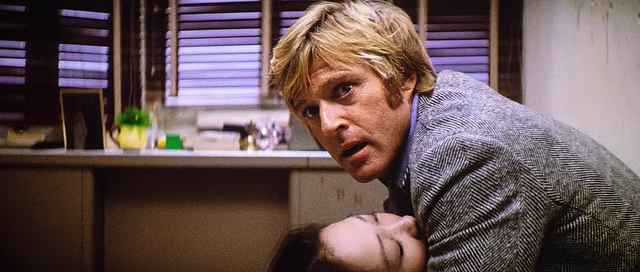
Turner spends the rest of the movie running from his own agency. He works out that a group inside the CIA ordered the hit, and he works out why. And then he does exactly what every movie hero is supposed to do. He goes to the New York Times.
Now if the movie had been made later (say, the early 1990s), that would have been his trump card. Sunshine is the best disinfectant and all that.
Except that's not what happened. The last scene is on the sidewalk outside the Times building with Turner telling Higgins, the CIA man who's been hunting him, that he's handed over the whole story. He thinks he's won.
Higgins, to his credit, is too polite to laugh at him. "How do you know they'll print it?"
The assured smile on his face tells us all the Times won't print the story. Because they've been told not to. And The Times (the "paper of record") always does as its told.
Your Voice Has No Power
Compare that to The Pelican Brief (both the book [1992] and the movie [1993]). It has exactly the same setup and gives you the ending you're most familiar with. Julia Roberts plays a law student who figures out who had two Supreme Court justices murdered and why, and the answer goes all the way to the White House. People around her start dying. To protect herself (lol), she goes to the press, in this case Denzel Washington at the Washington Herald.
Fine-ass Denzel gets his story, with receipts and everything. And the paper prints it. The president's chief of staff resigns and the president announces he won't run again. And Darby Shaw, the girl who exposed the whole thing, ends up sipping a drink on a beach with no one hunting her.
You got that, everyone? The White House and the intelligence apparatus, with assistance from billionaires, had two supreme court judges murdered. And the no-name chick who figured it out lived happily ever after because she went public. The American public believed everything she said, and the reporter's career was made.
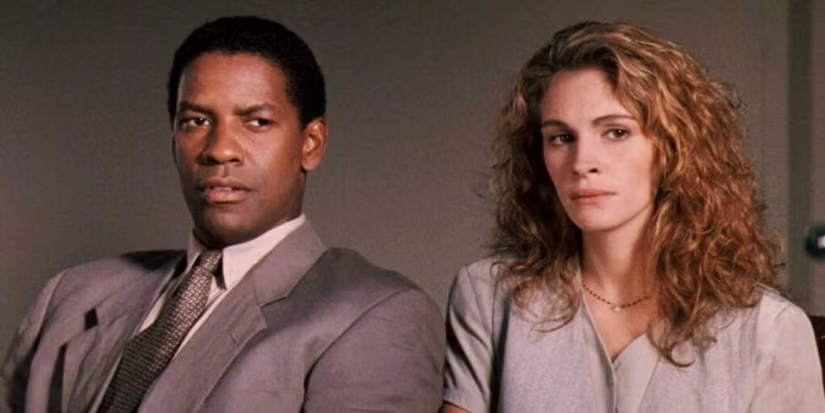
I was in junior high when I saw The Pelican Brief, so it's no shock I found this credible. But I kept on believing it into adulthood. And perhaps most Americans believe it to this day.
But it's a lie. In reality, Darby would have "died in a car wreck while driving under the influence," or, barring that, she would have been arrested for an appalling crime. Perhaps having child porn in her house. Who knows? But Darby Shaw's name would have been made radioactive. And in no world would the story of the murdered justices have seen the light of day.
It's 2026 now, and we've seen this play out in public multiple times. It's harder to keep all the dirt hidden in the digital age. We know what happens when a regular person does, in fact, "see something, say something."
And it ain't pretty.
Study to Be Quiet
Reinhold Niebuhr wrote the Serenity Prayer, the one you say at your "meetings." He asked God for the serenity to accept what he couldn't change, the courage to change what he could, and the wisdom to know the difference. This is the same man who wrote an entire book about how groups behave worse than the individuals in them and can't be shamed into behaving better. Niebuhr knew you can't talk an institution into growing a conscience.
Anybody who's spent time around the military or the prepper crowd knows the term "grey man." The grey man is the guy nobody notices. He doesn't draw attention, he doesn't escalate, and he puts his energy into the things he can actually affect.
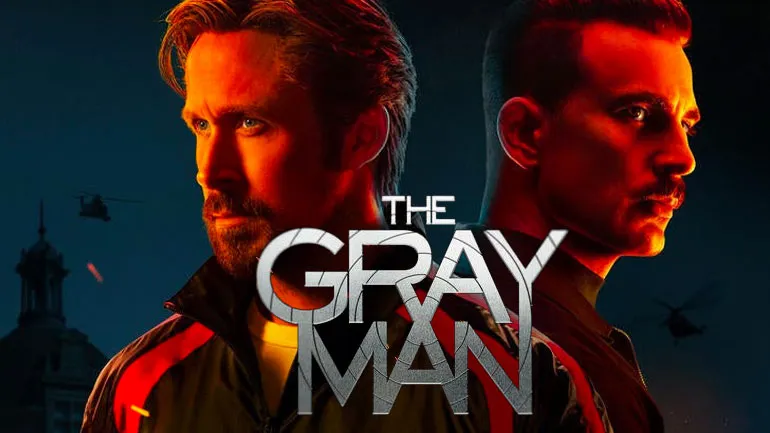
People hear that and call it cowardice. I call it staying alive long enough to be useful to the people who depend on you.
And if you don't believe me, remember that Sophie Cunningham DID speak out, exactly the way Matt Walsh wished Caitlin Clark would. She got an elbow to the face for her trouble, and the refs called the foul on her. The league still has no rule. Nothing changed.
I've written before about sphere sovereignty, Abraham Kuyper's idea that the state, the church, the family, and the individual each have their own God-given jurisdiction.
Whatever you think my politics are, you’re wrong
The Victorians Had it Right
 Kristin McTiernan
Go back and read Clark's answer with that in mind. She told a reporter which sphere the problem belongs to. And Matt Walsh wanted her head for it, pissed off she didn't see fit to grab authority that was never hers and ruin her career in the effort.
Paul put it even more plainly. In 1 Thessalonians, he tells the church to "study to be quiet, and to do your own business, and to work with your own hands."
Your business is your household. It's your marriage, your kids, your church, where you work (contribute your labor), and where you spend your money. Those are the places where your actions change something you can see with your own eyes. Everything else belongs to the governing bodies and to God, and both of them will get along fine without your quote-tweet.
So yeah, I have a lot of opinions about a lot of political things. But it's not often I'll speak on them publicly. Why? Because there's no point. We all know somebody who lost a job over a Facebook post about a policy they'll never have a say in. We all know somebody who blew up their church friendships over a fight being decided three states away. Neither of them changed a damn thing, and both of them are still paying for it.
Sorry, but it won't be me. And even if we don't know each other, I hope it won't be you either.
Written by

Join Us
Free subscribers get weekly essays on morality, culture, and character through fiction. Paid subscribers get everything.










Member discussion