Garbage People Who Get Better
I hate addicts.
Gambling, heroin, alcohol, shopping, pills. I hate it all. A lot of people make a moral differentiation between a hobo with a needle in his arm and the guy getting in debt to bet on a football game.
I do not.
I also don't subscribe to the disease model of addiction, and no amount of public health messaging is going to change that. Some substances create chemical dependency fast. Crack, for instance. But most take time. Days, weeks, months of repeated choices before the trap closes. Not to mention that everyone knows, from a very young age, what addiction is and what substances produce it. They knew it when they picked up the thing for the first time, and did it anyway. Which is why I insist that the addict becomes an addict as an outward expression of who they already are, which is, in my harsh and likely unfair estimation, garbage. Selfish garbage who will lie to your face, steal from your wallet, and ruin your Thanksgiving, then ask you to feel sorry for them because they can't help it.
I know. I'm a real treat at parties.
I do have enough self-awareness to know there's a glaring problem with my ideology on addiction: it has never helped a single addict recover and go on to have a good life. So while I may be correct about the moral architecture of addiction, correctness alone is not a useful contribution. And because I know this, I've spent years trying to figure out what, exactly, would make me extend grace to a person I instinctively want to throw away.
In 2006, Sherrybaby, a tiny indie film with a two-million-dollar budget, answered that question so completely that I have not needed to revisit it since.
Sherry Swanson and the Problem with Pity
Hollywood has a preferred version of the addict. You have seen her a hundred times. She is beautiful and tragic. She had a good life and then something terrible happened. The substance swept in. She was powerless! There will be a scene where a kind doctor or a patient loved one explains the disease model in gentle language, and the audience gets to nod along and feel enlightened for not judging. The addict is absolved before the third act even begins.
This is a cop-out. And every screenwriter who takes the easy route knows it. Lucky for all of us, director Laurie Collyer didn't take that weasel's way out, and neither did Maggie Gyllenhaal.

Sherrybaby does not deal in pity.
Sherry Swanson is a recovering heroin addict who's just been released from prison after three years for robbery. She's not a victim when we meet her. She's a liar. She uses sex to get what she wants, trading a blowjob for a job placement at a youth center and sleeping with the halfway house supervisor. She smothers her five-year-old daughter Alexis with a desperate, clinging need that has nothing to do with Alexis's wellbeing and everything to do with Sherry's image of herself as a good mother. She is selfish, volatile, and frequently embarrassing to watch.
One of the great things about the early 2000s awards was that they went to the most deserving, regardless of demographics, and Gyllenhaal definitely earned her Golden Globe nomination by refusing to soften any of this. There's a particular quality to her performance, that of a person who believes, with the utmost sincerity, that she is trying her hardest, while the audience can see that it's just another flavor of selfishness.
What I liked most about how the movie unfolded is that they waited til well after the midpoint to reveal, gradually and without fanfare, that Sherry's father sexually abused her as a child. Her brother Bobby knew about it. He said nothing, and spent years enabling Sherry's worst behavior out of guilt. The audience is given full access to Sherry's wound, and that of her brother, but denied permission to let the wound excuse everything that came after.
Being "Nice" Doesn't Actually Help
The supporting cast in Sherrybaby functions as a catalog of the ways people respond to addicts, and most of those ways are useless.
Bobby, played by Brad William Henke, is the guilty enabler. He gives his sister money she shouldn't have, lets her stay when she shouldn't be there, makes excuses for behavior that has no excuse, and lets her wreak havoc on his niece's life by letting Sherry drift in and out of her life. Bobby's kindness is the most dangerous thing in Sherry's life, because it allows her to believe she's getting away with it. His wife Lynette sees all of this clearly, because she carries no guilt toward Sherry. Lynette loves Alexis and will protect her, even if it means being cast as the villain in Sherry's self-pitying story. No one likes to see a mother being told to stay away from her own child. But Lynette is the only one brave enough to tell that truth.

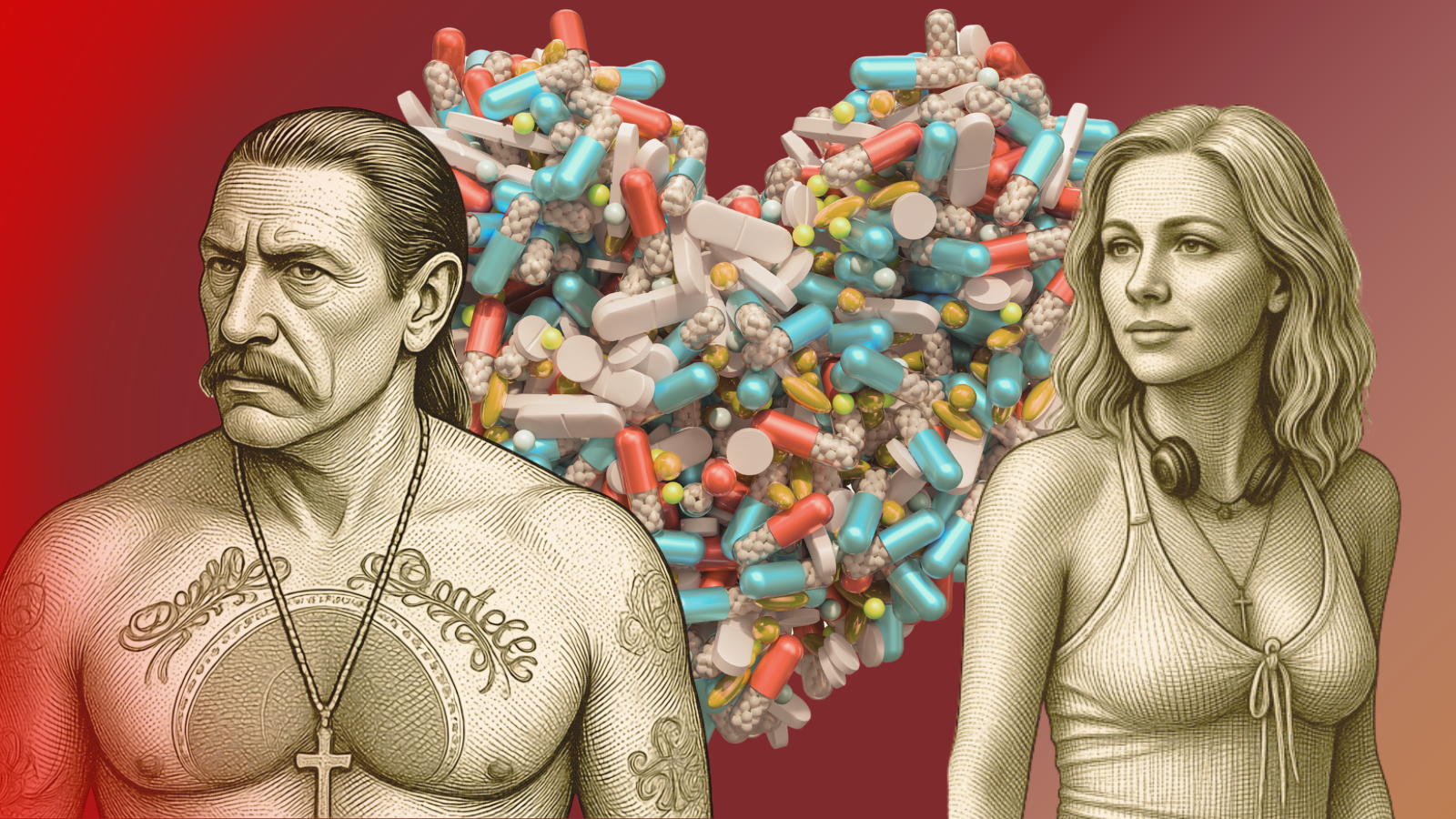
Dean Walker is the 12-step veteran Sherry meets at an AA meeting, and the reason I thought to watch Sherrybaby at all. Because Dean is played by Danny "Machete" Trejo. But he's not playing his typical bad guy here. Far from it. He's kind to her and patient, even after she relapses. Trejo's casting is one of those happy collisions between an actor and a role that makes both more powerful. If you don't know about this legend, Trejo kicked heroin and alcohol in 1968 while serving time at San Quentin. He got clean at twenty-four and became a drug counselor after his release, ending up on a film set only because a production assistant he was counseling called him and told him there was cocaine everywhere and he needed help staying clean.
That is the actual origin story of one of the most recognizable faces in Hollywood. He walked onto a movie set as a sponsor, not an actor.

Trejo has spent his entire public life doing exactly what Dean does in the film. He talks openly about the work it takes to stay sober, makes himself available to other addicts, and does not sugarcoat any of it. He's said in interviews that if he suspects someone on set is using, he'll make a scene about it. Bang on the door. Get in their face. Make it impossible to pretend everything is fine. He might have been exaggerating for humor, but somehow I suspect the truth is not far off the mark. Trejo knows firsthand that politeness kills addicts and embarrassment saves them.
Dean is the friend Sherry needs, the only person who's been where she is and come back from it, and the only one with the moral standing to call her on her garbage without being a hypocrite. But Dean alone can't save Sherry, because Sherry has to choose to be saved.
When Dad Catches You Sneaking Back In
Giancarlo Esposito plays Parole Officer Hernandez, and his performance should be the model for people in the profession. Hernandez isn't cruel, but he isn't kind either. He's a man who has heard every lie an addict tells, in every configuration, from every type of person, for so many years that he can spot the tell before the mouth opens. He's not your therapist or your buddy. He gives Sherry the rules and expects her to follow them.

When she doesn't, when she relapses and spends a night getting loaded while pretending to the world that she's still clean, she tiptoes back into her residence, thinking she has gotten away with it. Hernandez is there, sitting in the dark, waiting for her.
Sherry has been lying to his face for a while now. Basically since she got out. She's been lying to everyone. And in this moment where the game is obviously up and there's nothing left to say, she does the first honest thing she has done in the entire film.
She admits it. Immediately. "I'm dirty," she whispers.
He doesn't bolt out of his chair, handcuffs at the ready. Instead, he asks, "Do you wanna get clean?" And she does, this time telling the truth. So Hernandez gives her the one way to do so: she's going to treatment (inpatient) or she is going back to prison. Those are the two options. Pick one.
This is the most dignified thing anyone does for Sherry in the entire movie. Hernandez does not pity her or ask what drove her to relapse or ponder out loud whether the system has failed her. He gives her the information and trusts that she is a person capable of acting on it.
That trust, the trust that an addict is a moral agent who can still make choices, is the one thing every teary, soft-focus intervention scene in every prestige addiction drama refuses to offer.
Not Exactly a Happy Ending, but the Right One
At first it looks like Sherry is going to screw over Hernandez. And herself. And her brother. After Hernandez lets her leave and tells her where to report for treatment (promising a bench warrant if she doesn't show up), Sherry kidnaps her daughter.
She puts the girl in a car and drives toward Florida, toward a fantasy of starting over somewhere clean and warm where none of the institutions and systems and family members who complicate her life can reach her. This is the purest expression of the addict's logic: the belief that changing location is the same as changing yourself.
But as she drives, the sun setting, and her brother getting increasingly worried about how long Sherry's visit with Alexis is going, she looks in the mirror at her daughter in the back seat.
And turns the car around.

For most of the film, Sherry uses Alexis as a prop. Her daughter is the proof that Sherry is a good person, a good mother, a woman who deserves another chance. Every visit is more about Sherry than the child. She's performing motherhood for an audience of herself, and every time the performance fails, she self-destructs.
But this time, she really is being a good mother, thinking of her child over herself. She brings Alexis back to Bobby and Lynette's house, knowing that returning the child means submitting to a system that will keep them apart for months, maybe longer, as Bobby wants to adopt Alexis.
The selfishness stops. Barely. At the last possible moment. But she did decide to do the right thing, breaking a lifelong thought process that revolved only around herself.
One of the only other times I've seen this clear-eyed view of an addict was in Reginald "Bubbles" Cousins in The Wire.
Across five seasons of David Simon's Baltimore, Bubbles exists as the most sympathetic character in a show that doesn't trade in easy sympathy. Andre Royo plays him as a man who's smart, funny, generous, and incapable of staying clean. He tries. He relapses. He tries again. He cons, steals, informs for the police, and watches his world contract year by year as the drugs take everything except his decency, which persists despite his best efforts to destroy it.

Simon's show operates on the same principle as Sherrybaby. Baltimore is full of people who choose drugs and choose the street, and The Wire respects them enough to call those choices what they are. Nobody in that show is a passive recipient of fate. The institutions are broken, the options are bad, and the deck is stacked, but the characters still make decisions, all of which they will be held accountable for, one way or another.
Bubbles gets clean in the final season, after the death of his friend/surrogate son Sherrod shocks him into a grief so total that he attempts suicide. He survives, goes to the meetings (the ones that tell him his addiction isn't his fault). And he stays sober. In the series finale, his sister, who has kept him confined to her basement out of a reasonable fear that he would steal from her or bring chaos into her home, unlocks the door at the top of the stairs and invites him up for dinner.
It's one of the most beautiful scenes in television. It's beautiful because we watched him choose wrong for five years and then choose right. Would he have made that choice if the meeting he went to told him he was worthless and deserved his suffering? No. I don't even have to guess.
The disease model gives addicts a soft landing, a chance to be the hero in their own life. "Hey man, I'm sorry that crank just got itself into your system. It'll be hard to get it out, but if you do, you'll be the strongest, bravest person I know." Everyone wants to be a hero. And if you do what Bubbles did, honestly, you are. So yeah, the disease model is a lie. But I see why it exists, and since it's proven itself so effective in getting addicts to take that first step to sobriety, I guess I'm glad it exists.
Honesty is Hard but Worth it
So no, Sherrybaby didn't change my mind about the disease model of addiction. But it did change how I behave toward people who have struggled with addiction, something that would never have come around by being lectured or browbeaten.
Most practitioners of the disease model fall into the same mommy mode as many other therapized treatment: You poor thing. You couldn't help it. You have "the gene." From the bottom of my Irish-American heart, you can fuck off with that.
The honest way to communicate about addiction, which is what Sherrybaby and The Wire did is: You did this. And you can undo it. But only if you stop lying.
The first message is easier to deliver and easier to receive. It asks nothing of the speaker and nothing of the addict. The second message is confronting and uncomfortable and assumes that the person hearing it is a full human being with agency and responsibility and the power to change.
Every sanitized addiction narrative that softens the fall is stealing that agency from the audience and from the addicts watching. If you want to help an addict through a screen, stop telling them they're sick. Start telling them they're strong enough to have destroyed their own life, which means they are strong enough to rebuild it.
That's the only message that's ever worked, and yet it's the minority of big-name storytellers who are willing to deliver it.
Subscribe to get the latest articles and news
Member discussion